南京农业大学邓红平Org. Lett.:光诱导LMCT催化通过1,2-硼基迁移途径实现非活化烷基硼酯的区域选择性C(sp3)−H键官能团化反应
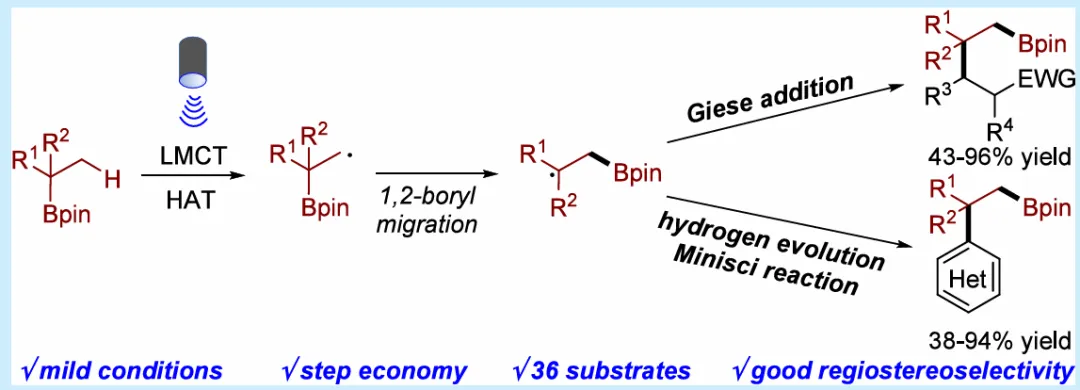
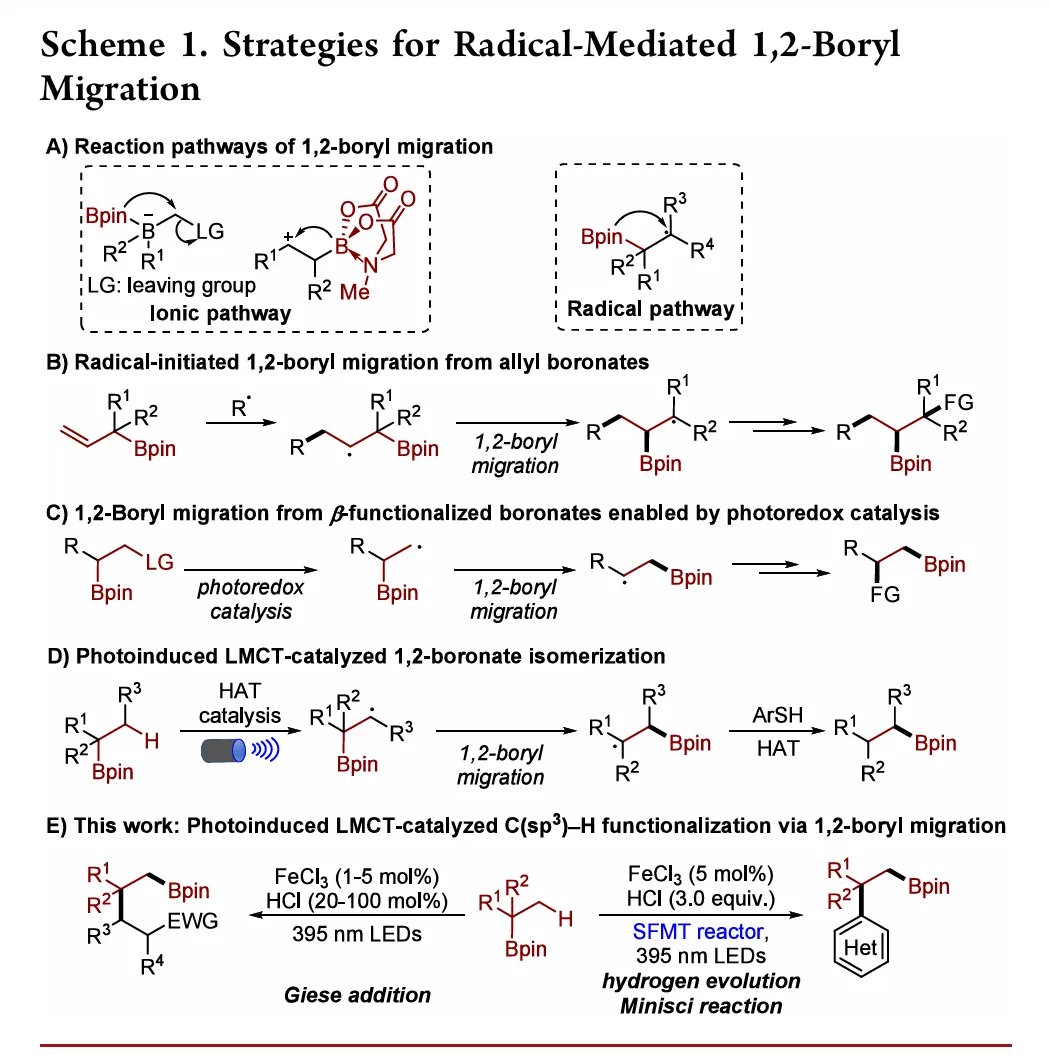
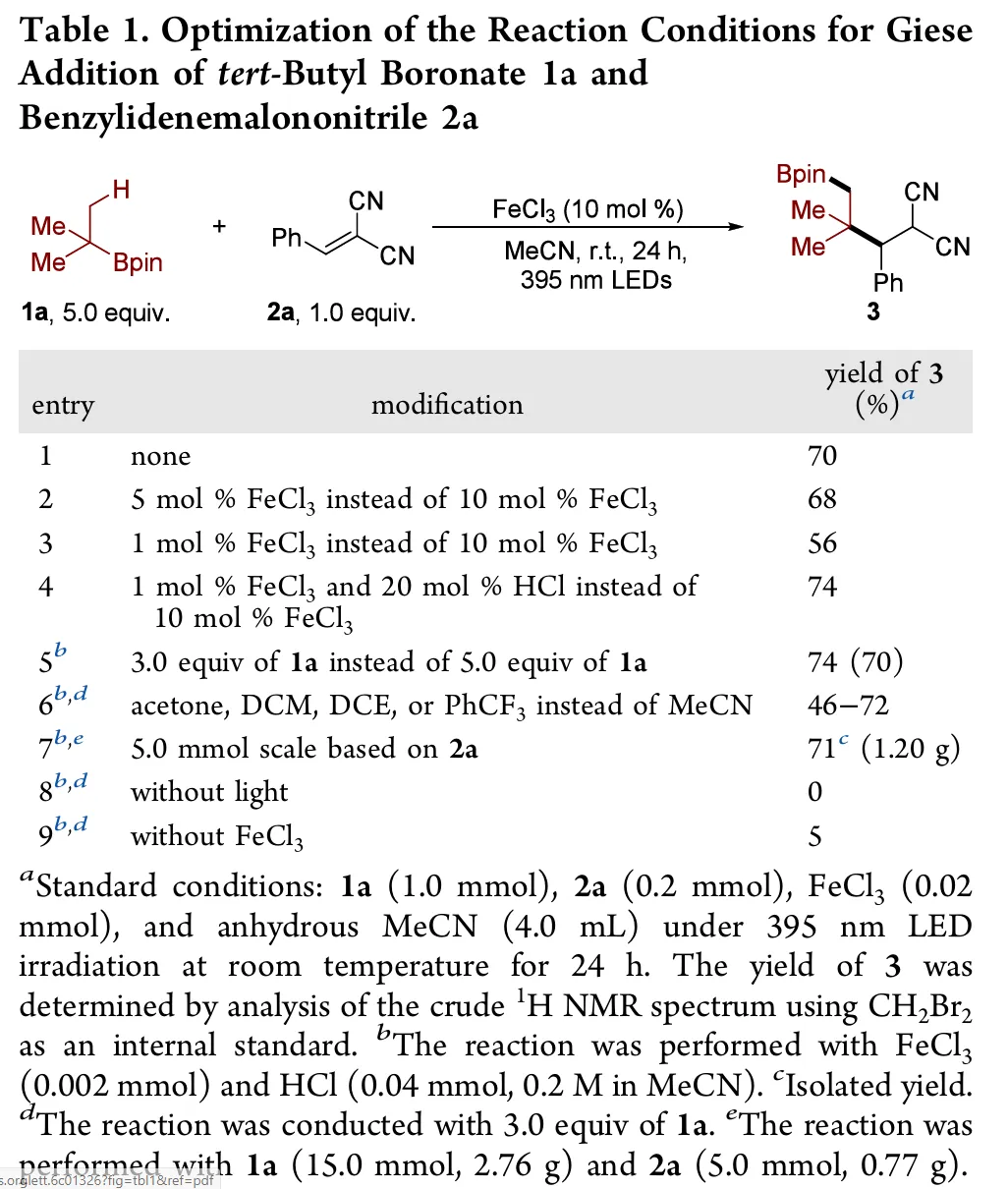
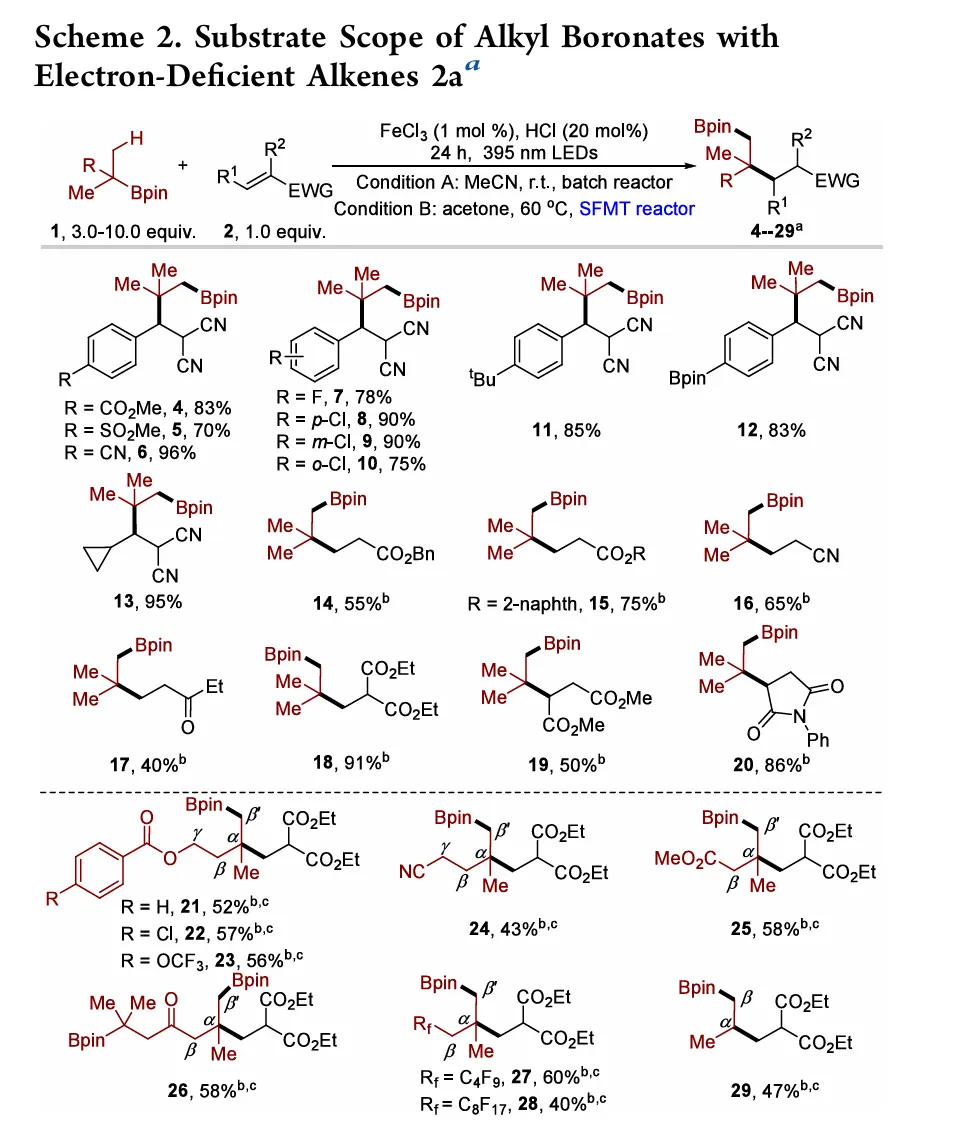
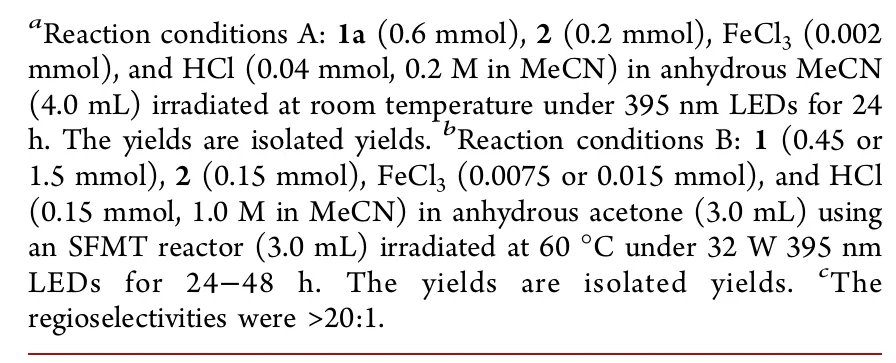
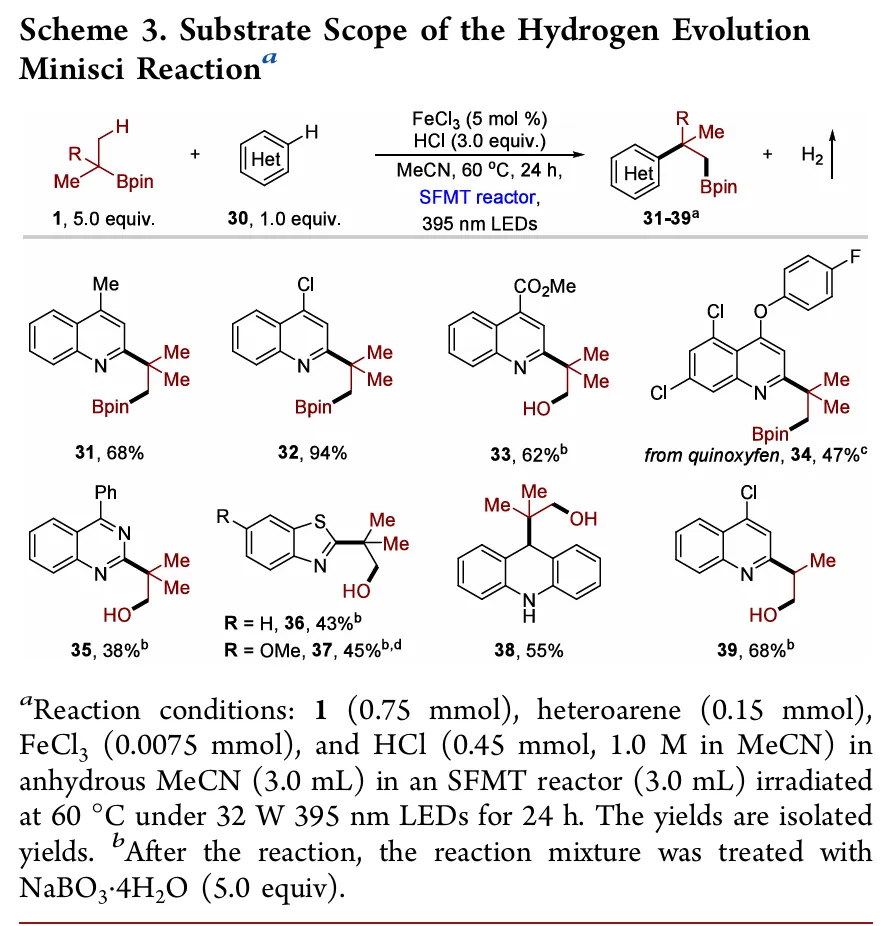
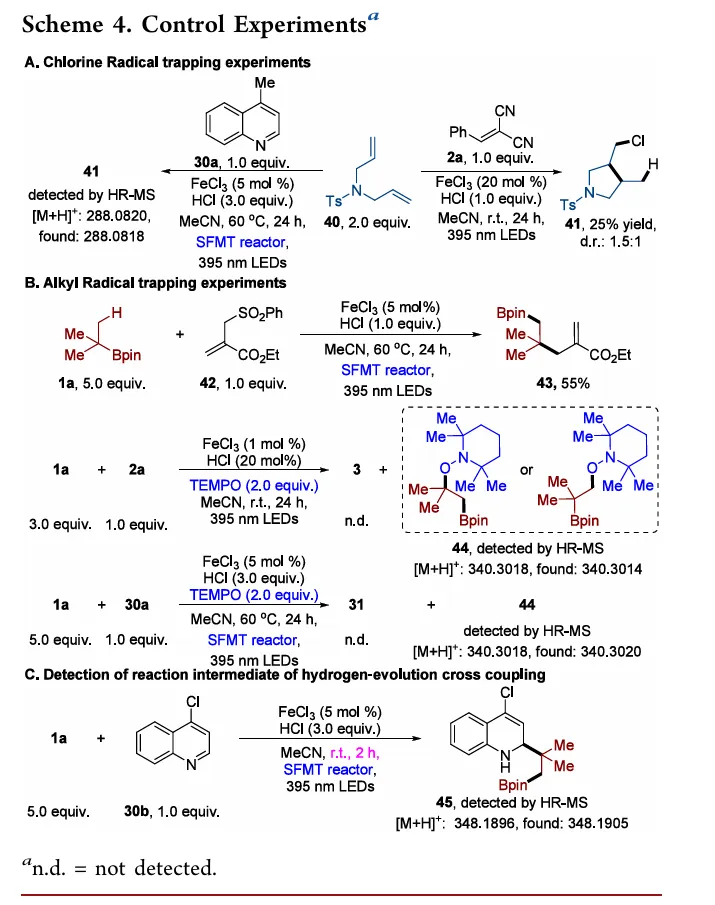
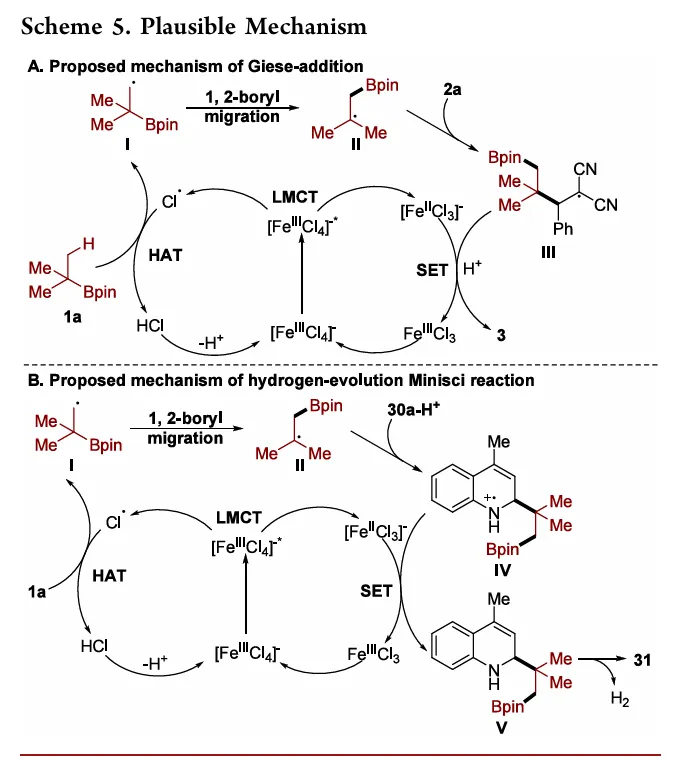
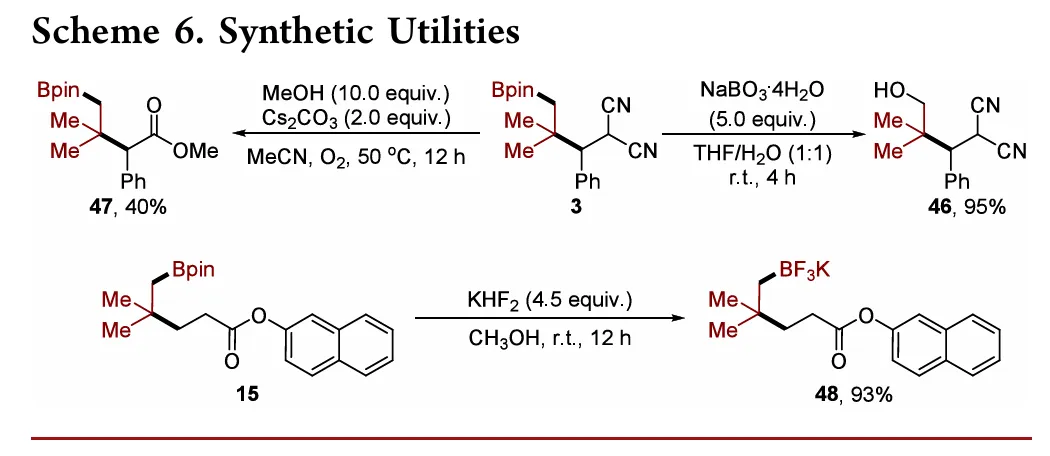
图1. TOC (图片来源于Org. Lett.)Radical-initiated 1,2-boryl migration has emerged as an efficient strategy for the synthesis of versatile functionalized organoboron compounds. However, this transformation typically requires the use of prefunctionalized boronates. Herein, we report a mild photoinduced ligand-to-metal charge transfer (LMCT) protocol for the C(sp3)−H alkylation and arylation of unactivated alkyl boronates. This method enables a step-economical route to diverse functionalized boronates with good regioselectivity. Mechanistic studies suggest that the reaction proceeds through a sequential hydrogen atom transfer and 1,2-boryl migration pathway.图2. 研究背景及本策略 (图片来源于Org. Lett.)图3. 条件优化 (图片来源于Org. Lett.)图4. 烷基硼酯和缺电子烯烃2a底物拓展 (图片来源于Org. Lett.)图5. 析氢Minisci反应底物拓展 (图片来源于Org. Lett.)图6. 控制实验 (图片来源于Org. Lett.)图7. 可能的反应机理 (图片来源于Org. Lett.)图8. 合成应用 (图片来源于Org. Lett.)In summary, we have developed a photoinduced LMCT catalyzed protocol that enables the unactivated C(sp3)-H functionalization of alkyl boronates through a radical-initiated 1,2-boryl migration pathway. The method exhibits a broad substrate scope, accommodating a diverse range of electron deficient alkenes and heteroarenes, and delivers functionalized alkyl boronates with excellent regioselectivities. Mechanistic studies support a pathway involving chlorine radical-mediated hydrogen atom transfer, followed by 1,2-boryl migration and subsequent radical trapping. Moreover, the value of this approach was illustrated by the synthesis of a diverse functional complex.DOI: https://doi.org/10.1021/acs.orglett.6c01326