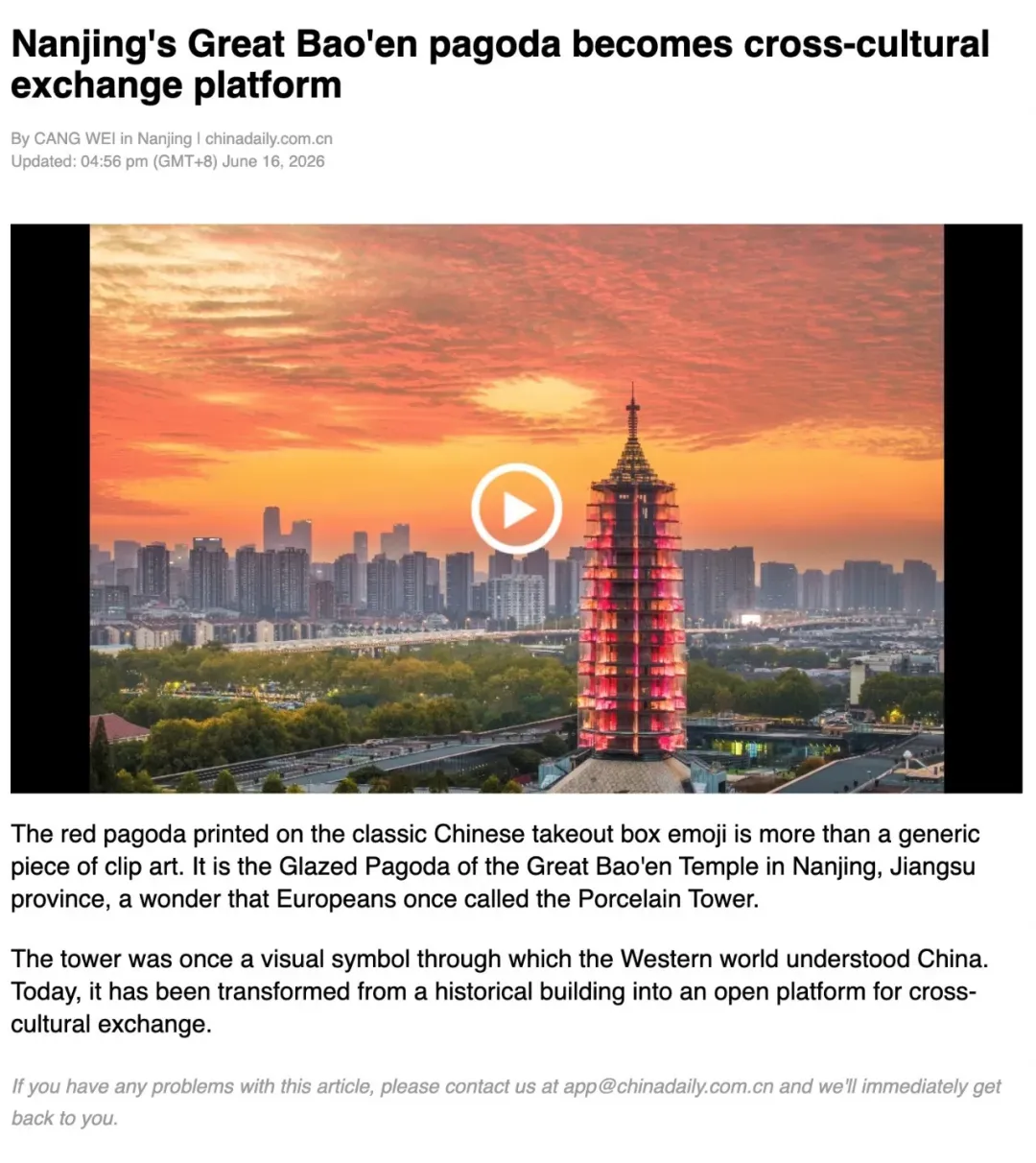
In the United States, white folded takeaway boxes stamped with a red pagoda motif have long been synonymous with Chinese food. They frequently appear in movies and TV shows, such as Friends and The Big Bang Theory.
在美国,印着红色古塔图案的白色折叠外卖餐盒早已成为中餐的代名词。《老友记》《生活大爆炸》等诸多影视剧里,都频频出现它的身影。
Online speculation about whether the famous pagoda is real or not has put the Glazed Pagoda of the Great Bao’en Temple in Nanjing, the capital of Jiangsu province, in the social media spotlight.
网络上关于这座知名古塔是否真实存在的热议,让位于江苏省会南京的大报恩寺琉璃塔一跃成为社交媒体热点。
The image found on some of those cartons is that of the nine-story, 78-meter-tall edifice with its glazed facade, which has long been considered a marvel in China and abroad.
这些餐盒上印着的图案,正是这座九层、高达78米、通体琉璃饰面的古塔。长久以来,它在海内外都被誉为旷世奇观。
“The tower was once a visual symbol through which the Western world understood China,” said Wang Wenxi, director of the Great Bao’en Temple Ruins Museum.
“这座古塔曾是西方世界认知中国的视觉符号。” 大报恩寺遗址博物馆馆长王文溪介绍道。
Once considered one of the seven wonders of the medieval world, the ancient building inspired the design of the Great Pagoda at Kew Gardens in London and was featured in a Hans Christian Andersen fairy tale.
这座古建筑曾位列中世纪世界七大奇迹,伦敦邱园的中国塔便是以它为蓝本设计,安徒生也曾在童话中写过它。
Yongle Emperor Zhu Di, the third emperor of the Ming Dynasty (1368-1644), started the ambitious project in 1412 to repay gratitude to his parents. Construction was completed in 1428, and the tower quickly became a popular tourist attraction. It remained so right up until its destruction in 1856 during the Taiping Rebellion (1851-64).
明成祖朱棣,即明代(1368-1644)第三位皇帝,于1412年启动这项浩大工程,以报答父母养育之恩。工程于至1428年完工,此后该塔迅速成为远近闻名的游览胜地。这份繁华一直延续至1856年太平天国运动期间,宝塔不幸毁于战火。
“Every piece of the facade (on the tower) was intricately designed, with extremely stringent firing requirements resulting in an even, flawless glaze,” said Zhang Yongyi, a Jiangnan culture scholar. Jiangnan refers to the region to the south of China’s Yangtze River.
江南文化学者张永祎介绍:“塔身每一块琉璃构件都雕琢繁复,烧制标准极为严苛,釉面均匀光洁、毫无瑕疵。” 江南,指长江以南区域。
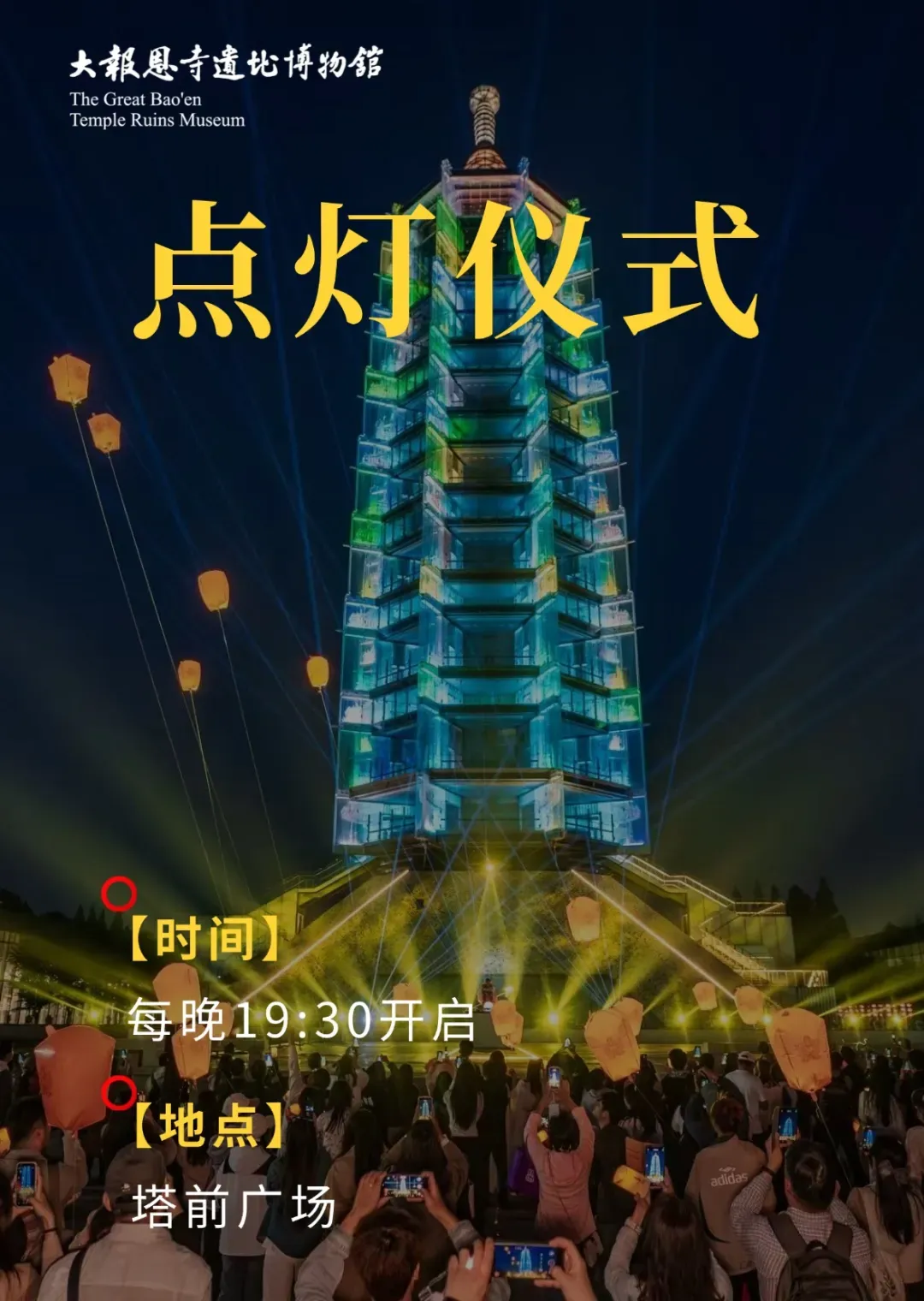
At night, the whole pagoda was said to glow like a resplendent lantern, visible far across the city. The pagoda remained the tallest structure in Nanjing throughout the Ming Dynasty and most of the Qing Dynasty (1644-1911), and was an object of endless poetry.
相传每到夜晚,整座宝塔灯火通明,宛如璀璨华灯,城中很远的地方都能望见。整个明代乃至清代大部分时期 (1644-1911),它都是南京最高建筑,无数文人墨客为它提笔赋诗。
When Europeans first laid eyes on it, they did not see glaze, but something closer to myth. In 1638, Alvaro Semedo, a Portuguese Jesuit missionary in China, likened it to ancient Roman architecture, mistaking its tiles for porcelain. The travelogue of Johan Nieuhof, a Dutch traveler who visited China, cemented its fame, and the “Porcelain Tower” became a symbol of the Orient, incorporated into the Chinoiserie movement and endlessly borrowed in Western architecture, art and literature.
Although it was destroyed in a conflict, the ruins still offer a glimpse of its former splendor.
欧洲人初见此塔时,并未认出琉璃,反倒生出神话般的想象。1638年,在华葡萄牙耶稣会传教士曾德昭将它类比古罗马建筑,误把琉璃构件认作瓷器。荷兰旅行家约翰・尼霍夫来华后写下游记,让琉璃塔声名远扬,“瓷塔” 就此成为东方的象征,融入中国风艺术浪潮,被大量运用于西方建筑、美术与文学创作中。尽管古塔毁于战乱,但遗址依旧能让人窥见当年的盛景。
In 2008, archaeologists excavating beneath the pagoda’s foundation discovered an underground palace. Inside were the Seven Treasures Pagoda of King Ashoka and, even more extraordinarily, the skull relic of Shakyamuni — the holiest relic in Buddhism.
2008年,考古工作者在塔基下方发掘出地宫,地宫内出土七宝阿育王塔,更为珍贵的是释迦牟尼佛顶骨舍利 —— 佛教至高圣物。
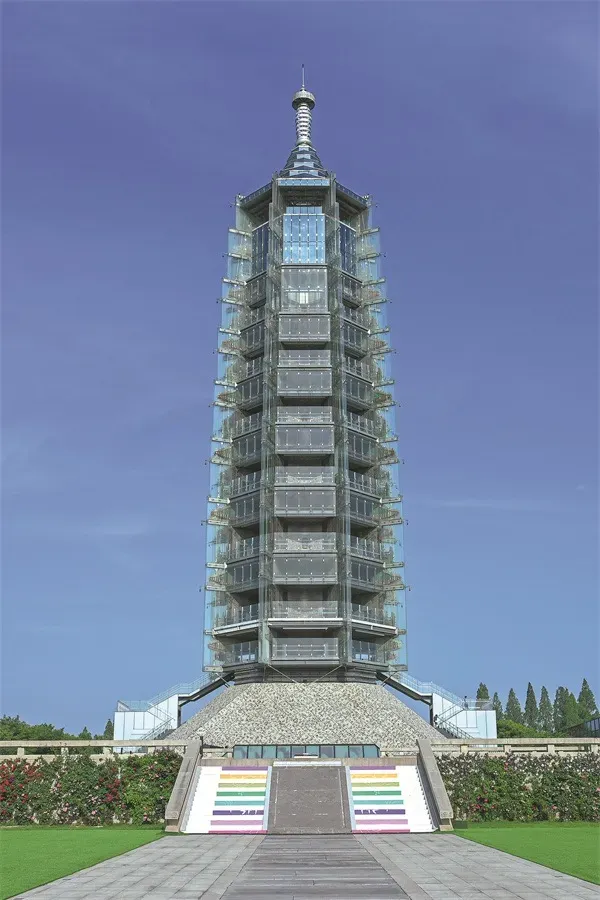
In 2015, a modern tower about 93 meters tall was completed, incorporating the original ruins and paying deference to the tower’s historical importance.
2015年,一座高约93米的现代新塔落成。新塔依托原有遗址修建,充分致敬古塔厚重的历史价值。
“Restoring the glazed pagoda of the Ming Dynasty would require the original materials, craftsmanship and techniques, all of which are unavailable today,” Wang, the museum director, said.
博物馆馆长王文溪表示:“若原样复刻明代琉璃塔,需要古时原生材料、古法工艺与烧制技术,如今早已失传。”
She explained that the steel frame and ultra-white glass of the modern structure carry the load precisely above the fragile underground palace, protecting it completely from subsidence.
她解释,新塔采用钢结构与超白玻璃搭建,能够精准分担重量,完整保护下方脆弱的地宫,避免地基沉降造成损毁。
“The public regret is not that the tower wasn’t rebuilt in its original form, but that this world wonder was destroyed by war. We are restoring not just the appearance of the pagoda, but also its significant historical meaning.”
Today, the new tower still attracts visitors, albeit of a different kind.
“大众心中的遗憾,不在于古塔没能完全复原旧貌,而在于这一世界奇观曾遭战火摧毁。我们重建的不只是塔的外形,更是它承载的厚重历史内涵。”
如今,这座新塔依旧游人如织,只是前来打卡的游客有着别样心境。
Shauchenka Volha, a student from Belarus at Nanjing University of Science and Technology, recently shared her ascent of the tower on the social media Xiaohongshu.
“I finally climbed the Great Bao’en Temple today,” she wrote. “The lift took me to the eighth floor, and the moment I stepped out, the whole of Nanjing was spread out before me — the city walls, the Qinhuai River, the grey-tiled rooftops of Laomendong and the mountains fading into the distance.”
白俄罗斯留学生沃尔哈・绍琴卡就读于南京理工大学,不久前她在小红书分享了登塔体验。
她写道:“今天终于登上大报恩塔!电梯直达八层,踏出电梯的那一刻,整座南京尽收眼底:明城墙、秦淮河、老门东青灰瓦片的屋舍,还有远处连绵淡去的群山。”
Guo Jun in Nanjing and Wang Qian in Beijing contributed to this story.




 10个月宝宝每天需要喝多少奶粉?

