2026江苏苏州初二英语期末复习易错题倒计时第三天来了!
大家好我是在江苏苏州吴江教小学初中英语的娜娜老师,我立志更新1000篇对学生英语提高有帮助的文章,记得关注老师每天分享最新英语知识,今天娜娜老师分享初二期末易错题
一、完形填空逐句讲解
原文 & 解析
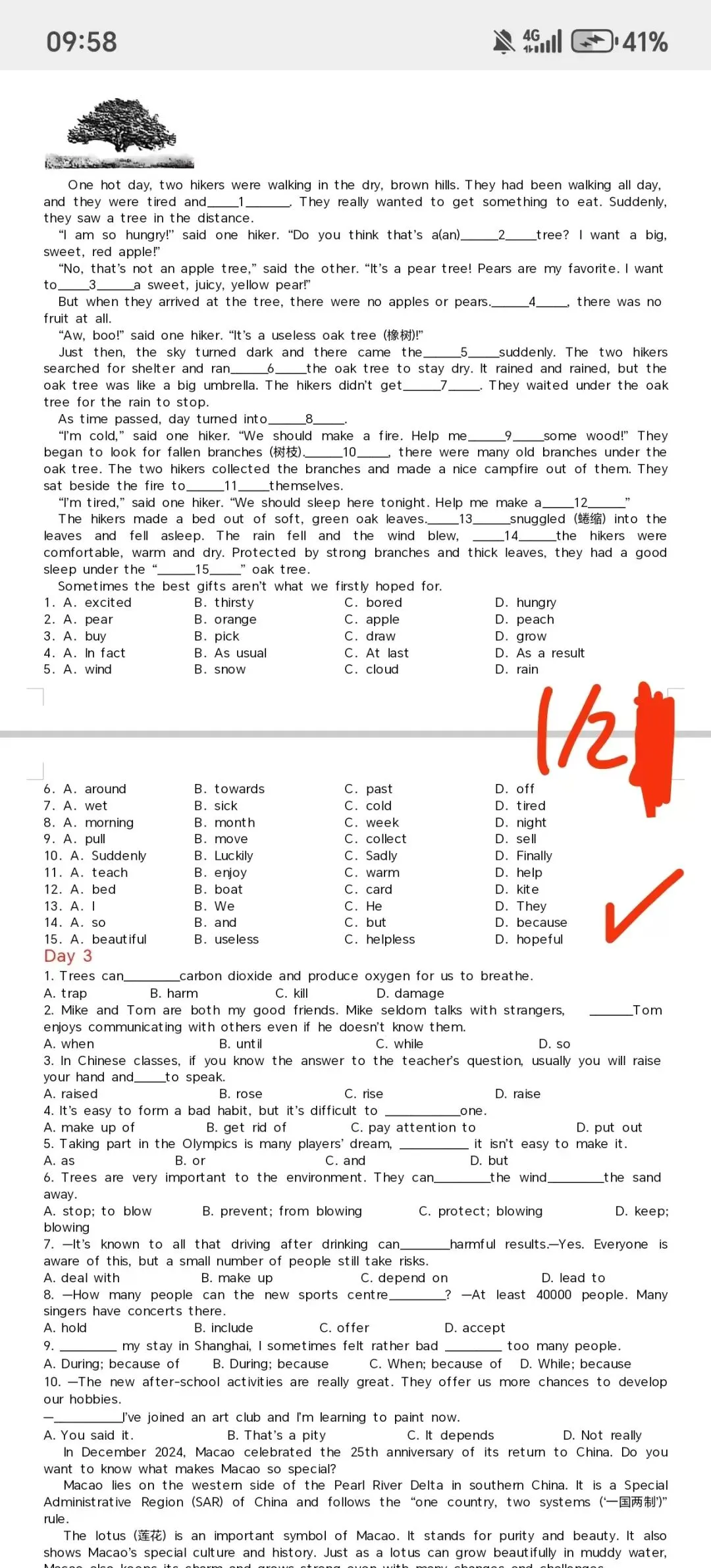
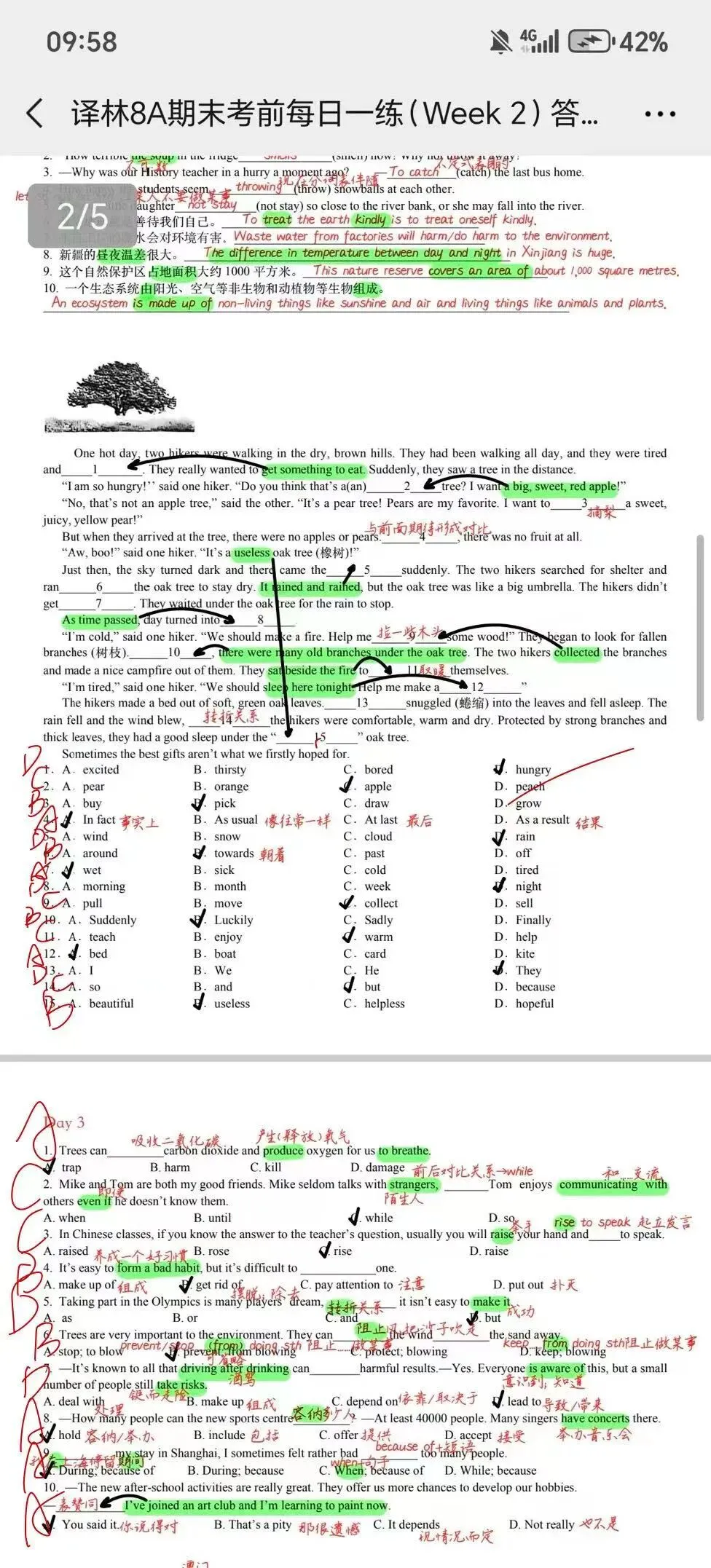
1. One hot day, two hikers were walking in the dry, brown hills. They had been walking all day, and they were tired and 1. They really wanted to get something to eat.
◦ 后一句提到“想找点吃的”,所以对应的是“饿的”,选 D. hungry。
◦ tired and hungry 是常见搭配,表示“又累又饿”。
2. “I am so hungry!” said one hiker. “Do you think that’s a(n) 2 tree? I want a big, sweet, red apple!”
◦ 后面提到“apple”,所以这里问的是“苹果树”,选 C. apple。
3. “No, that’s not an apple tree,” said the other. “It’s a pear tree! Pears are my favorite. I want to 3 a sweet, juicy, yellow pear!”
◦ 在树上摘梨用动词 pick,选 B. pick。
◦ 这个词在采摘水果的场景中很常用,比如 pick apples/oranges。
4. But when they arrived at the tree, there were no apples or pears. 4, there was no fruit at all.
◦ 前一句说没有苹果或梨,这里递进表示“事实上,完全没有果子”,选 A. In fact。
◦ As usual(像往常一样)、At last(最后)、As a result(结果)都不符合语境。
5. Just then, the sky turned dark and then came the 5 suddenly.
◦ 后一句提到“rained”,所以这里是“雨”来了,选 D. rain。
6. The two hikers searched for shelter and ran 6 the oak tree to stay dry.
◦ 跑向橡树躲雨,用 towards(朝着),选 B. towards。
◦ around(围绕)、past(经过)、off(离开)都不符合“躲雨”的动作逻辑。
7. It rained and rained, but the oak tree was like a big umbrella. The hikers didn’t get 7.
◦ 橡树像伞一样,所以他们没有被淋湿,选 A. wet。
8. As time passed, day turned into 8.
◦ 白天变成夜晚,是固定表达 day turned into night,选 D. night。
9. “I’m cold,” said one hiker. “We should make a fire. Help me 9 some wood!”
◦ 生火需要收集木柴,用 collect,选 C. collect。
◦ pull(拉)、move(移动)、sell(卖)都和“生火”无关。
10. They began to look for fallen branches(树枝). 10, there were many old branches under the oak tree.
◦ 他们去找树枝,“幸运的是”树下有很多枯枝,选 B. Luckily。
◦ Suddenly(突然)、Sadly(悲伤地)、Finally(最后)都不符合语境。
11. The two hikers collected the branches and made a nice campfire out of them. They sat beside the fire to 11 themselves.
◦ 坐在火边是为了让自己暖和起来,用 warm,选 C. warm。
◦ warm oneself 是固定搭配,意思是“取暖”。
12. “I’m tired,” said one hiker. “We should sleep here tonight. Help me make a 12.”
◦ 后一句提到“made a bed out of soft, green oak leaves”,所以是做一张“床”,选 A. bed。
13. The hikers made a bed out of soft, green oak leaves. 13 snuggled(蜷缩) into the leaves and fell asleep.
◦ 这里指代两个徒步者,用 They,选 D. They。
14. The rain fell and the wind blew, 14 the hikers were comfortable, warm and dry.
◦ 前半句是“下雨刮风”,后半句是“舒适温暖干燥”,是转折关系,用 but,选 C. but。
15. Protected by strong branches and thick leaves, they had a good sleep under the “15” oak tree.
◦ 一开始他们觉得橡树“useless(没用的)”,但后来它提供了庇护,所以这里呼应开头,选 B. useless。
◦ 这个词的前后对比也是这篇完形的一个核心亮点。
二、单选题逐题讲解
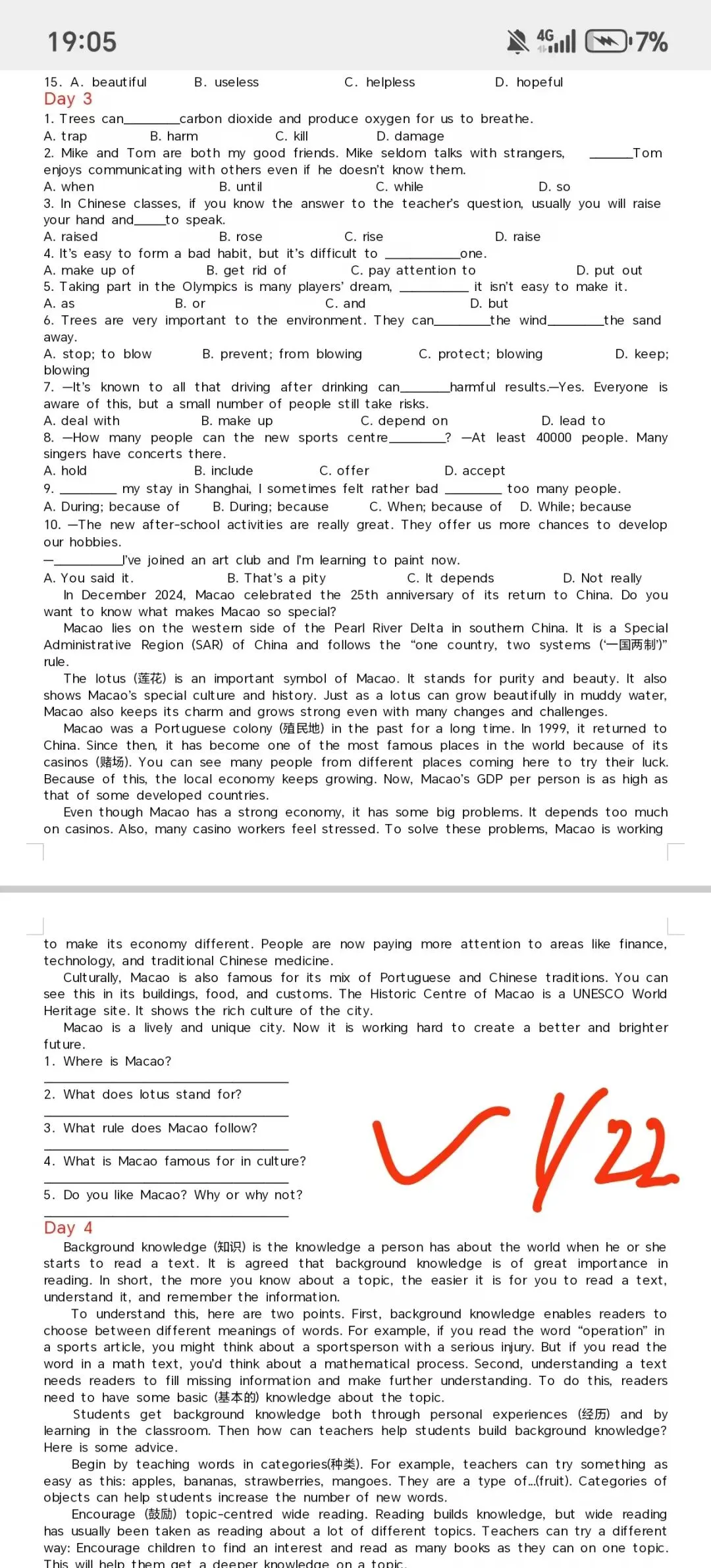
1. Trees can ______ carbon dioxide and produce oxygen for us to breathe.
• 句意:树木可以吸收二氧化碳,产生氧气供我们呼吸。
• trap 在这里表示“吸收、捕获”,是生态类阅读里的高频词;
• harm(伤害)、kill(杀死)、damage(破坏)都不符合语境。
• 答案:A. trap
2. Mike and Tom are both my good friends. Mike seldom talks with strangers, ______ Tom enjoys communicating with others even if he doesn’t know them.
• 句意:Mike很少和陌生人说话,然而Tom即使不认识别人也喜欢交流。
• while 用于对比两个人的不同行为,是中考的高频考点;
• when(当…时)、until(直到)、so(所以)都不表对比。
• 答案:C. while
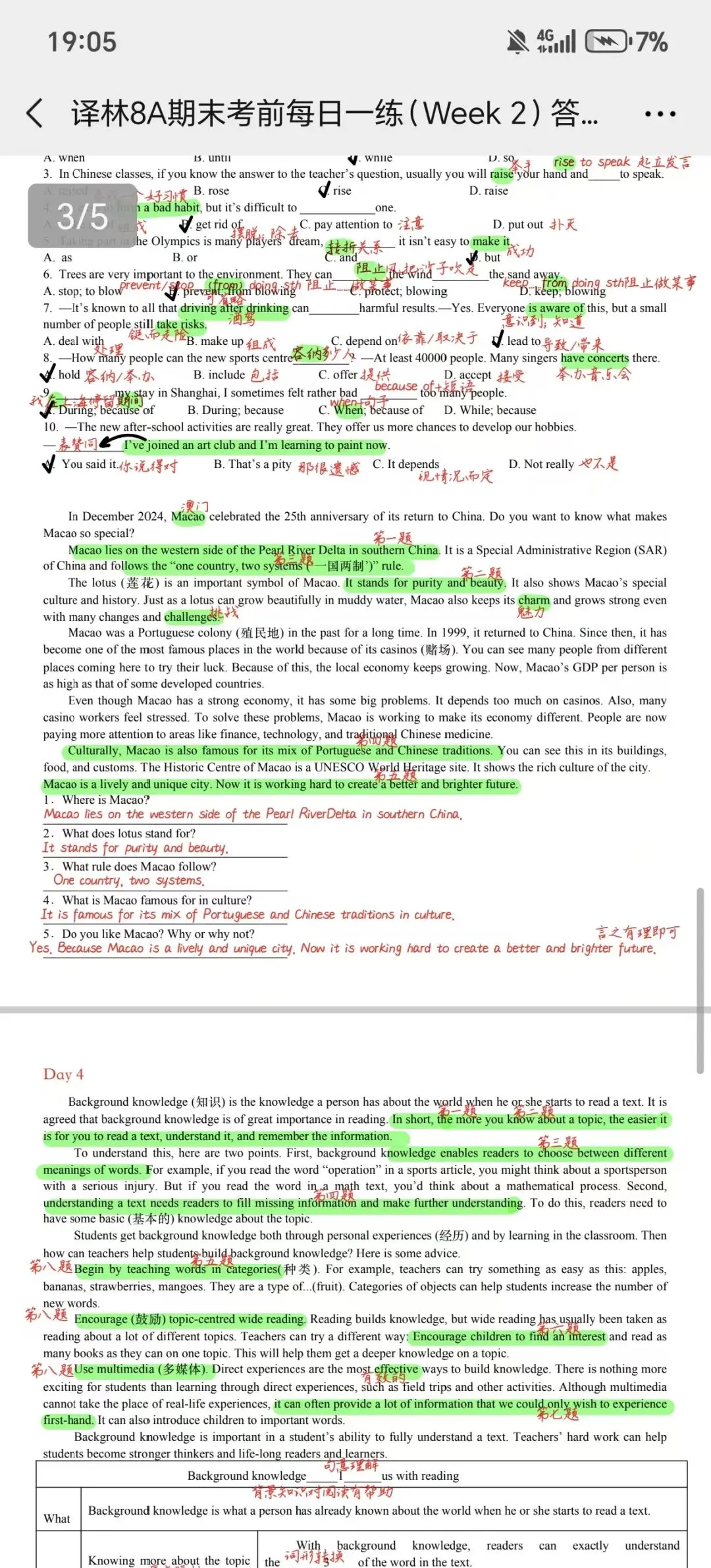
3. In Chinese classes, if you know the answer to the teacher’s question, usually you will ______ your hand and ______ to speak.
• 句意:语文课上,如果你知道答案,通常会举手然后站起来发言。
• raise 是及物动词,后面可以直接跟宾语 your hand;
• rise 是不及物动词,后面不能直接跟宾语,所以“站起来发言”用 rise to speak。
• 答案:第一空 D. raise;第二空 C. rise
4. It’s easy to form a bad habit, but it’s difficult to ______ one.
• 句意:养成坏习惯很容易,但戒掉很难。
• get rid of 表示“摆脱、戒掉”,是固定短语;
• make up(编造)、pay attention to(注意)、put out(扑灭)都不符合。
• 答案:B. get rid of
5. Taking part in the Olympics is many players’ dream, ______ it isn’t easy to make it.
• 句意:参加奥运会是很多运动员的梦想,但实现它并不容易。
• 前半句是肯定,后半句是转折,用 but;
• as(因为)、or(否则)、and(并且)都不符合逻辑。
• 答案:C. but
6. Trees are very important to the environment. They can ______ the wind ______ the sand away.
• 句意:树木对环境很重要,它们可以阻止风把沙子吹走。
• prevent sb./sth. from doing sth. 是固定搭配,表示“阻止…做某事”;
• 也可以用 stop sb./sth. from doing sth.,这里第二个空是 blowing,所以选 B. prevent; from blowing。
• 答案:B. prevent; from blowing
7. —It’s known to all that driving after drinking can ______ harmful results. —Yes. Everyone is aware of this, but a small number of people still take risks.
• 句意:众所周知,酒后驾驶会导致有害的后果。
• lead to 表示“导致、带来”,是中考常考短语;
• deal with(处理)、make up(编造)、depend on(依靠)都不符合。
• 答案:D. lead to
8. —How many people can the new sports centre ______? —At least 40000 people. Many singers have concerts there.
• 句意:新的体育中心能容纳多少人?
• hold 在这里表示“容纳、举办”,是场馆类场景的高频词;
• include(包括)、offer(提供)、accept(接受)都不符合。
• 答案:A. hold
9. ______ my stay in Shanghai, I sometimes felt rather bad ______ too many people.
• 句意:在上海停留期间,我有时因为人太多而感觉很糟糕。
• during one’s stay in + 地点 表示“在某地停留期间”;
• because of 后面跟名词短语(too many people),而 because 后面要跟句子。
• 答案:C. During; because of
10. —The new after-school activities are really great. They offer us more chances to develop our hobbies. —______ I’ve joined an art club and I’m learning to paint now.
• 句意:—新的课外活动真的很棒,给了我们更多培养爱好的机会。—你说得对,我加入了美术俱乐部,现在在学画画。
• You said it 表示“你说得对,我同意”,是口语常用表达;
• That’s a pity(真遗憾)、It depends(看情况)、Not really(不完全是)都不符合回应逻辑。
• 答案:A. You said it
好的,我这就为你整理这份高频词汇和短语清单,涵盖这篇练习里的核心考点,方便学生考前速记。
高频词汇与短语清单
一、完形填空核心词汇
单词/短语 中文释义 例句/考点
hungry 饥饿的 tired and hungry(又累又饿)是固定搭配
pick 采摘(水果等) pick apples/pears 是采摘水果的常用动词
in fact 事实上 用于递进或纠正前文内容,表转折
towards 朝着 run towards...(跑向……)表方向
wet 湿的 get wet(被淋湿)是常见搭配
collect 收集 collect wood/branches(收集木柴/树枝)
luckily 幸运地 用于引出好的转折
warm 使……温暖 warm oneself(取暖)是固定搭配
bed 床 make a bed(铺床/做一张床)
useless 无用的 文中前后对比,呼应情节转折
二、单选题核心短语与考点
短语/句型 中文释义 例句/考点
trap carbon dioxide 吸收二氧化碳 生态类阅读高频表达
while 然而(表对比) 用于对比两个人/事物的不同行为,中考高频考点
raise one’s hand 举手 raise 是及物动词,后接宾语
rise to speak 站起来发言 rise 是不及物动词,后不接宾语
get rid of 摆脱、戒掉 表示“改掉坏习惯”时的固定搭配
prevent...from doing 阻止……做某事 同义短语:stop...from doing
lead to 导致、带来 表“引起某种结果”,中考常考
hold 容纳、举办 用于描述场馆的容纳人数
during one’s stay in 在……停留期间 表示“在某地待着的那段时间”
because of 因为 后接名词/短语;because 后接句子
You said it 你说得对 口语中表示同意的常用表达
完整完形填空(含正确答案)
One hot day, two hikers were walking in the dry, brown hills. They had been walking all day, and they were tired and hungry. They really wanted to get something to eat. Suddenly, they saw a tree in the distance.
“I am so hungry!” said one hiker. “Do you think that’s an apple tree? I want a big, sweet, red apple!”
“No, that’s not an apple tree,” said the other. “It’s a pear tree! Pears are my favorite. I want to pick a sweet, juicy, yellow pear!”
But when they arrived at the tree, there were no apples or pears. In fact, there was no fruit at all.
“Aw, boo!” said one hiker. “It’s a useless oak tree (橡树)!”
Just then, the sky turned dark and then came the rain suddenly. The two hikers searched for shelter and ran towards the oak tree to stay dry. It rained and rained, but the oak tree was like a big umbrella. The hikers didn’t get wet. They waited under the oak tree for the rain to stop.
As time passed, day turned into night.
“I’m cold,” said one hiker. “We should make a fire. Help me collect some wood!” They began to look for fallen branches (树枝). Luckily, there were many old branches under the oak tree. The two hikers collected the branches and made a nice campfire out of them. They sat beside the fire to warm themselves.
“I’m tired,” said one hiker. “We should sleep here tonight. Help me make a bed.”
The hikers made a bed out of soft, green oak leaves. They snuggled (蜷缩) into the leaves and fell asleep. The rain fell and the wind blew, but the hikers were comfortable, warm and dry. Protected by strong branches and thick leaves, they had a good sleep under the “useless” oak tree.
Sometimes the best gifts aren’t what we firstly hoped for.
在一个炎热的日子里,两个徒步旅行者在干燥、枯黄的山间行走。他们已经走了一整天,又累又饿,真的很想吃点东西。突然,他们看到远处有一棵树。
“我好饿啊!”一个徒步者说,“你觉得那是一棵苹果树吗?我想要一个又大又甜又红的苹果!”
“不,那不是苹果树,”另一个人说,“是梨树!梨是我的最爱,我想去摘一个香甜多汁的黄梨!”
但当他们走到树下时,却既没有苹果也没有梨。事实上,树上根本没有任何果子。
“唉,真没劲!”一个徒步者说,“这就是棵没用的橡树!”
就在这时,天空突然变暗,雨也倾盆而下。两个徒步者赶紧找地方躲雨,朝着橡树跑过去想保持干爽。雨一直下,但橡树就像一把大伞,他们没有被淋湿。他们在橡树下等着雨停。
随着时间流逝,白天变成了夜晚。
“我好冷,”一个徒步者说,“我们生堆火吧,帮我收集些木头!”他们开始寻找掉落的树枝。幸运的是,橡树下有很多枯枝。两人捡来树枝,生起了一堆温暖的篝火,坐在火边取暖。
“我累了,”一个徒步者说,“我们今晚就在这儿睡吧,帮我做一张床。”
他们用柔软的绿色橡树叶铺了一张床,两人蜷缩在树叶里睡着了。外面风雨交加,但他们却睡得舒适、温暖又干爽。在粗壮的树枝和茂密的树叶保护下,他们在那棵“没用的”橡树下睡得很香。
有时候,最好的礼物,并不是我们最初想要的东西。