南京师范大学韩维ACIE:铁催化非活化烯烃的反马氏羟叠氮化反应
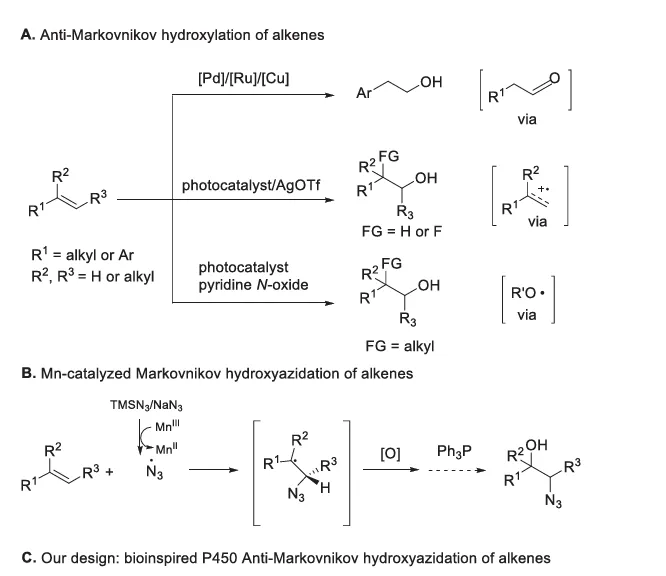
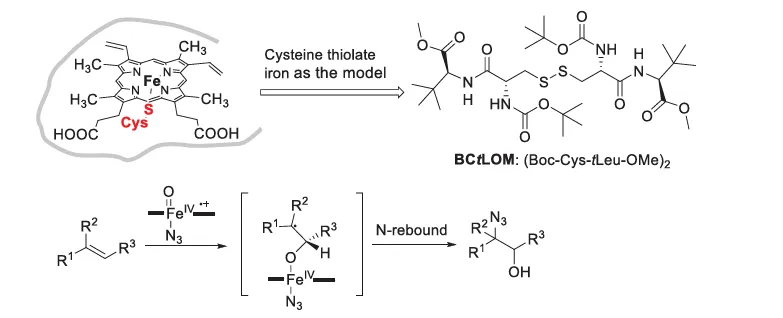
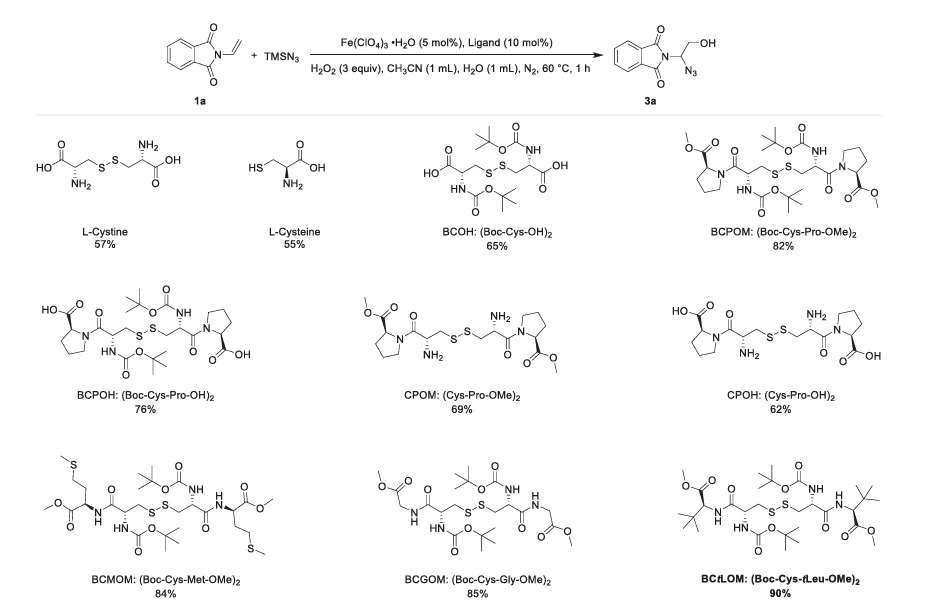
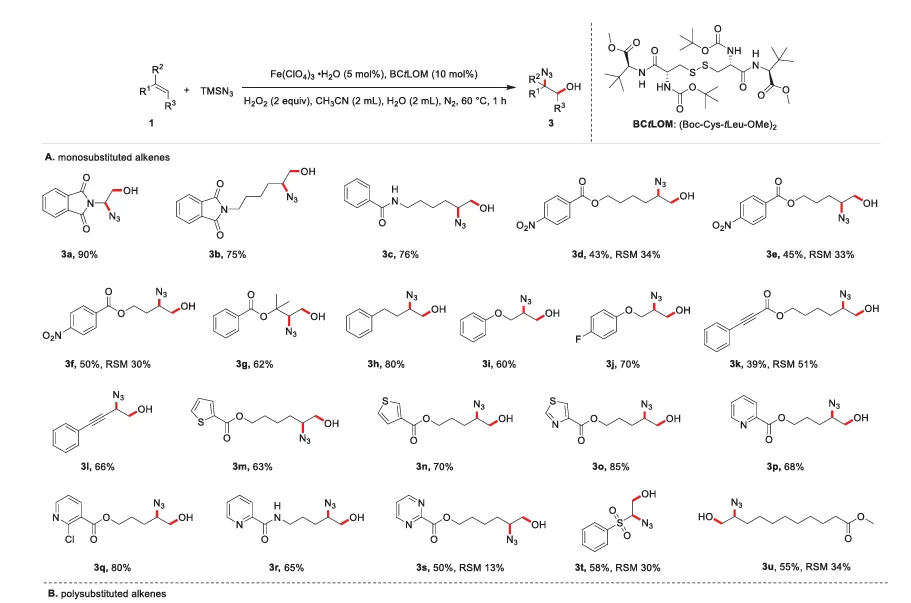
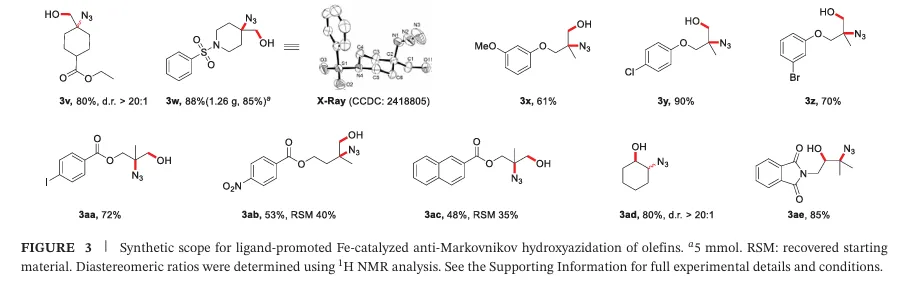
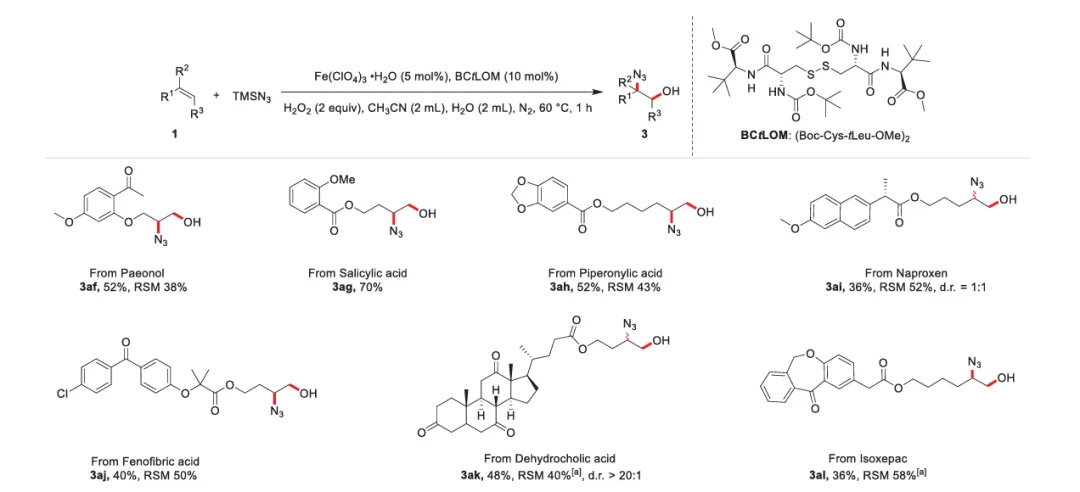
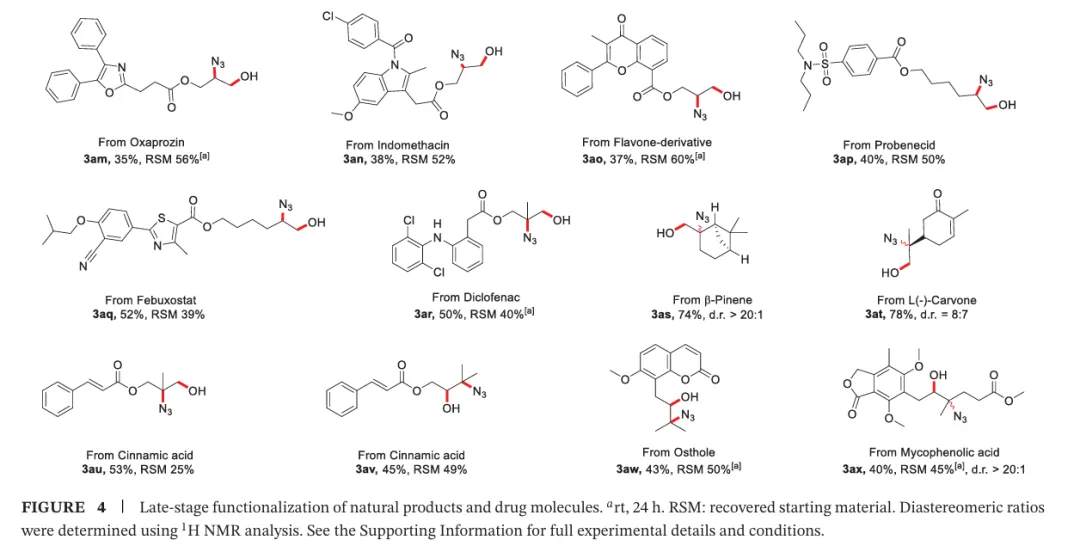
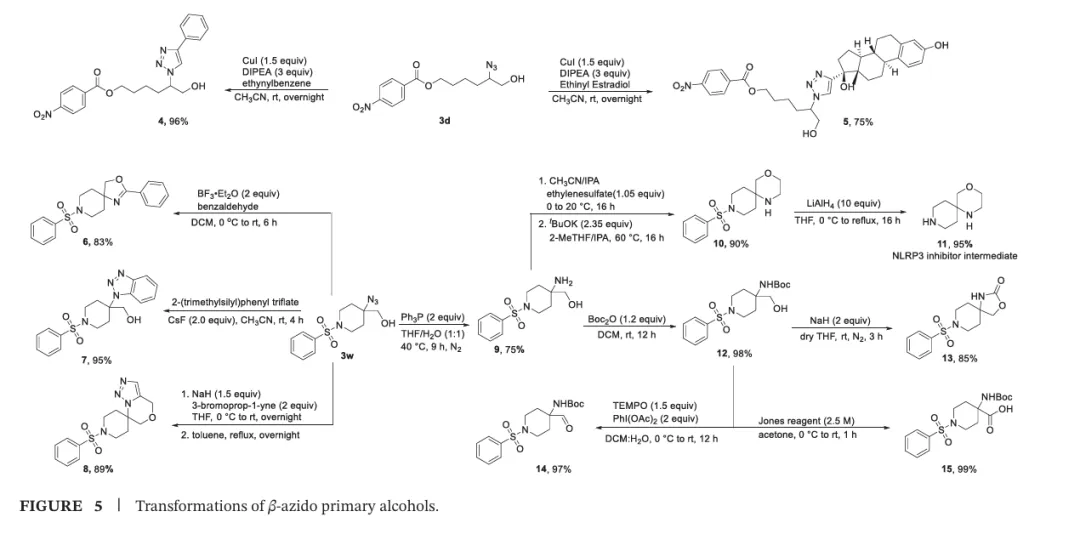
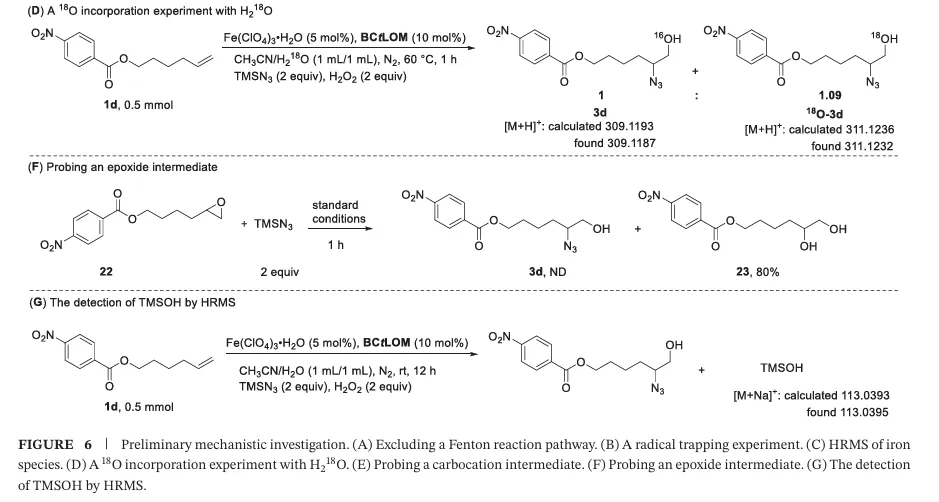
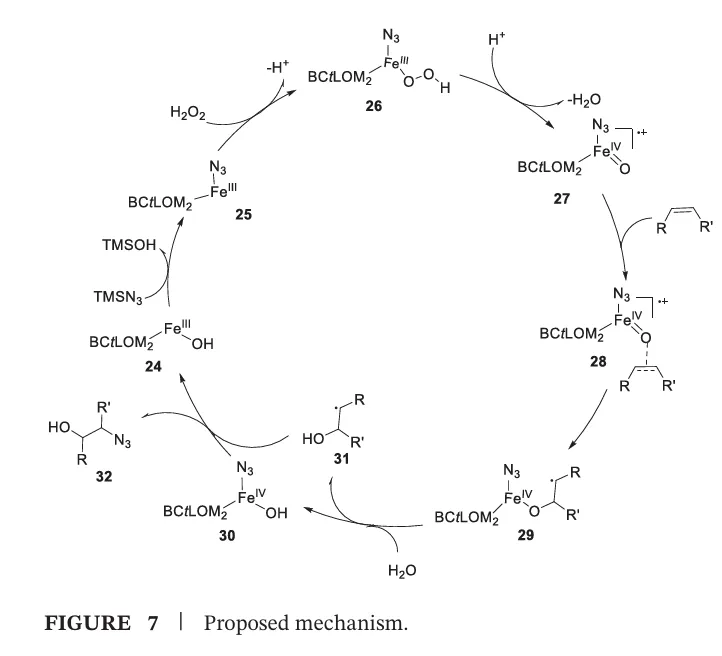
Anti-Markovnikov oxidation of alkenes to access primary alcohols remains a significant synthetic challenge due to inherent regioselectivity constraints. Here we report a bio-inspired iron catalyst bearing a cysteine-derived ligand (BC t LOM) that enables radical hydroxyazidation of unconjugated tri-, di-, and monosubstituted alkenes with high anti-Markovnikov selectivity. Utilizing TMSN3 and hydrogen peroxide as azide source and oxidant, respectively, this method operates under mild conditions and tolerates diverse functional groups, including complex natural products and pharmaceuticals. Mechanistic studies suggest an iron-oxo mediated radical pathway that suppresses competing epoxidation. This approach provides direct access to unprotected 2-azido primary alcohols, versatile intermediates for further functionalization. The strategy expands the toolkit for selective alkene difunctionalization, offering potential applications in organic synthesis, chemical biology, and drug discovery.图4. 天然产物和药物分子的后期修饰反应(图片来源于ACIE)In conclusion, we have developed a bio-inspired iron/BCtLOM catalyzed radical hydroxyazidation of a broad range of unconjugated tri-, di-, and monosubstituted alkenes with inversion of regioselectivity to access valuable β-azido primary alcohols. This transformation employs easily handled TMSN3 and eco-friendly H2O2 as the azide source and sole oxidant, respectively, and is operationally simple. The successful late-stage anti-Markovnikov hydroxyazidation of complex natural products and pharmaceuticals underscores the promise of this method for applications across diverse settings, including organic synthesis, chemical biology, and drug discovery. This bio-inspired catalytic system harnesses the potent iron-oxo reactivity of cytochrome P450 yet strategically circumvents its typical epoxidation pathway. By preserving the hydroxy alkyl radical intermediates, this approach enables new strategies in high-valent metal-oxo chemistry and allows for diversification of alkene feedstocks through anti-Markovnikov difunctionalization.