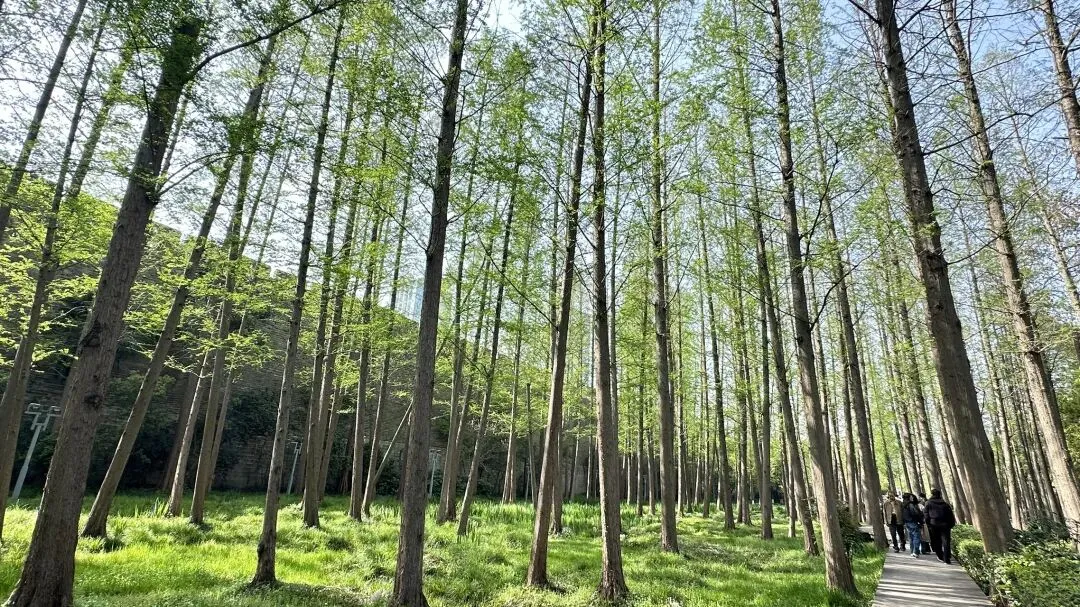
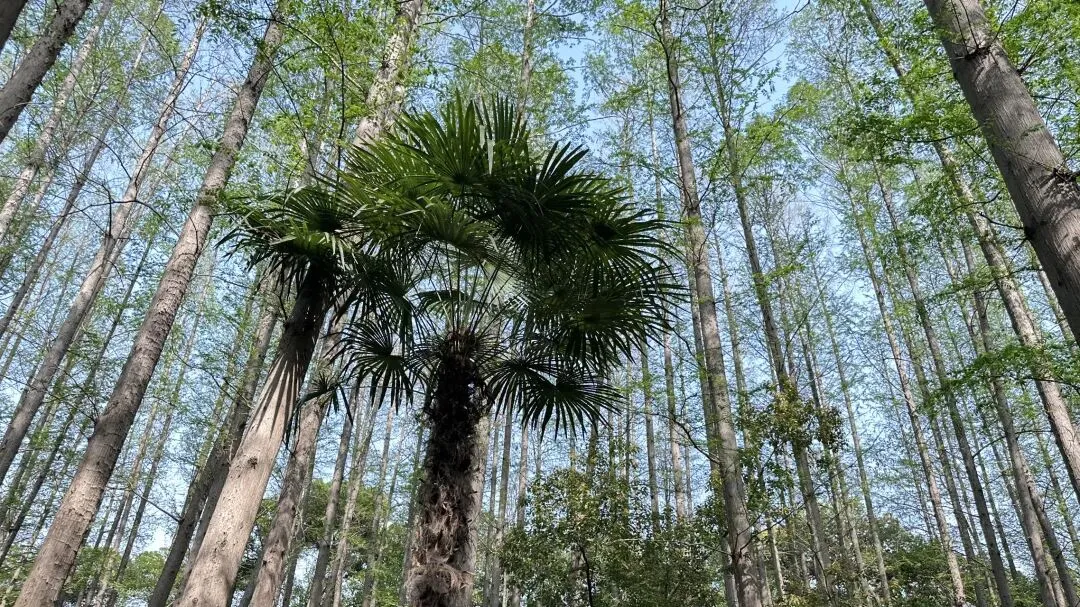
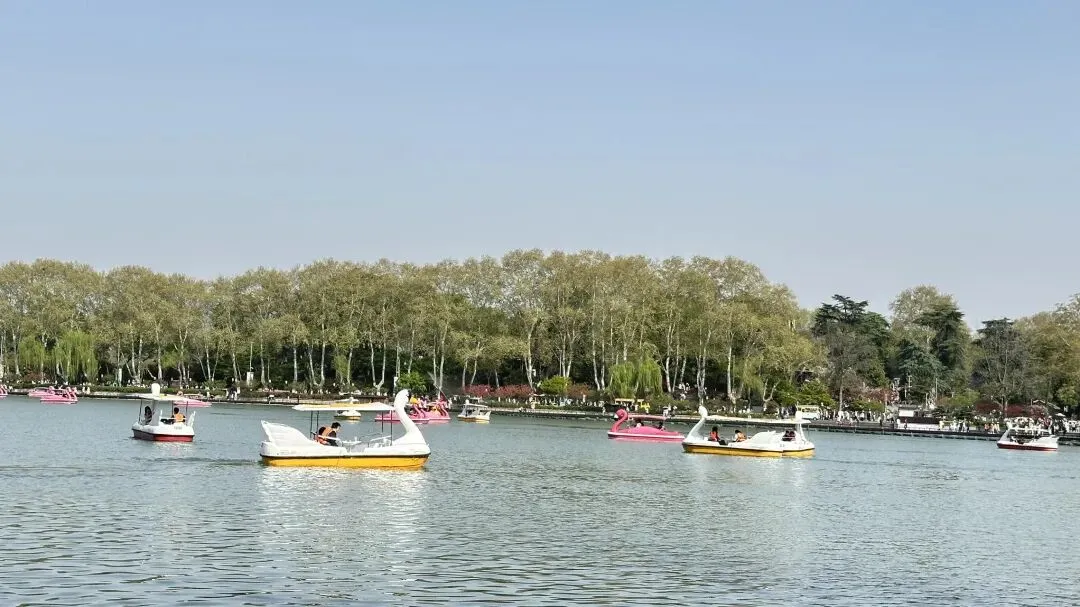
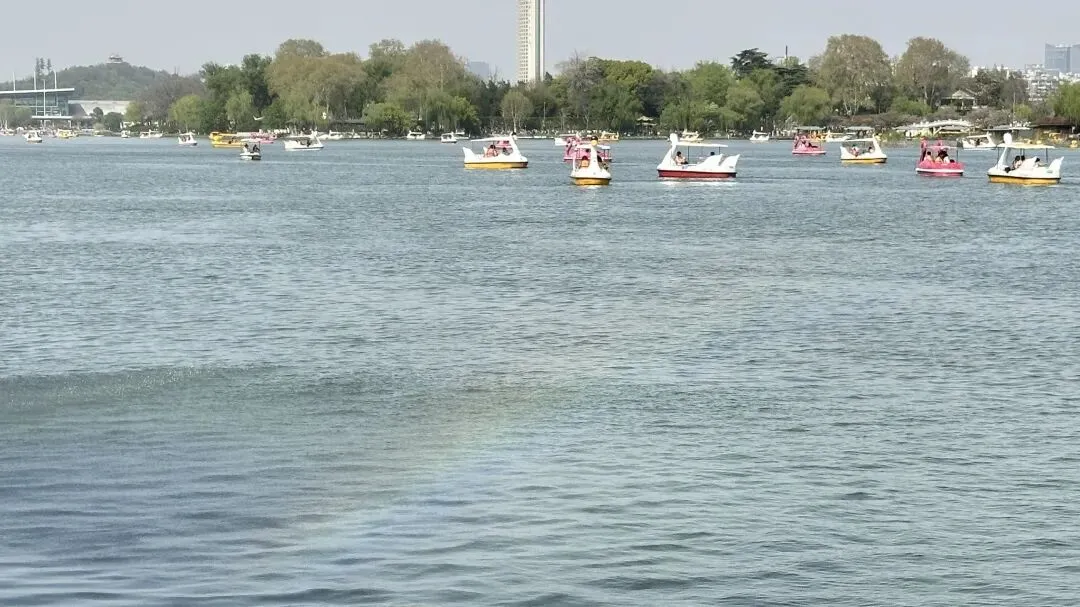
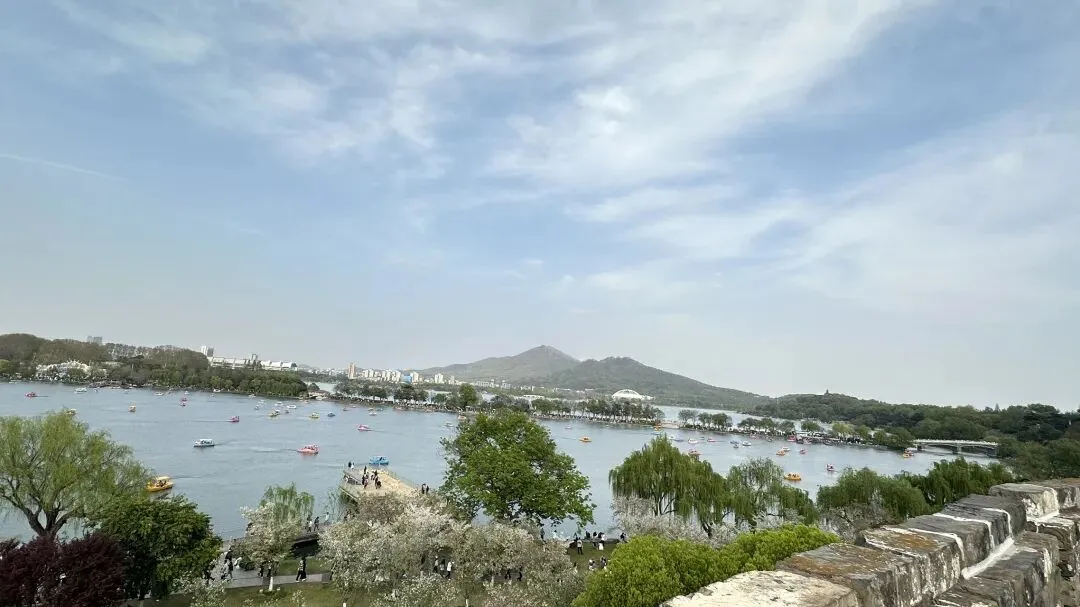
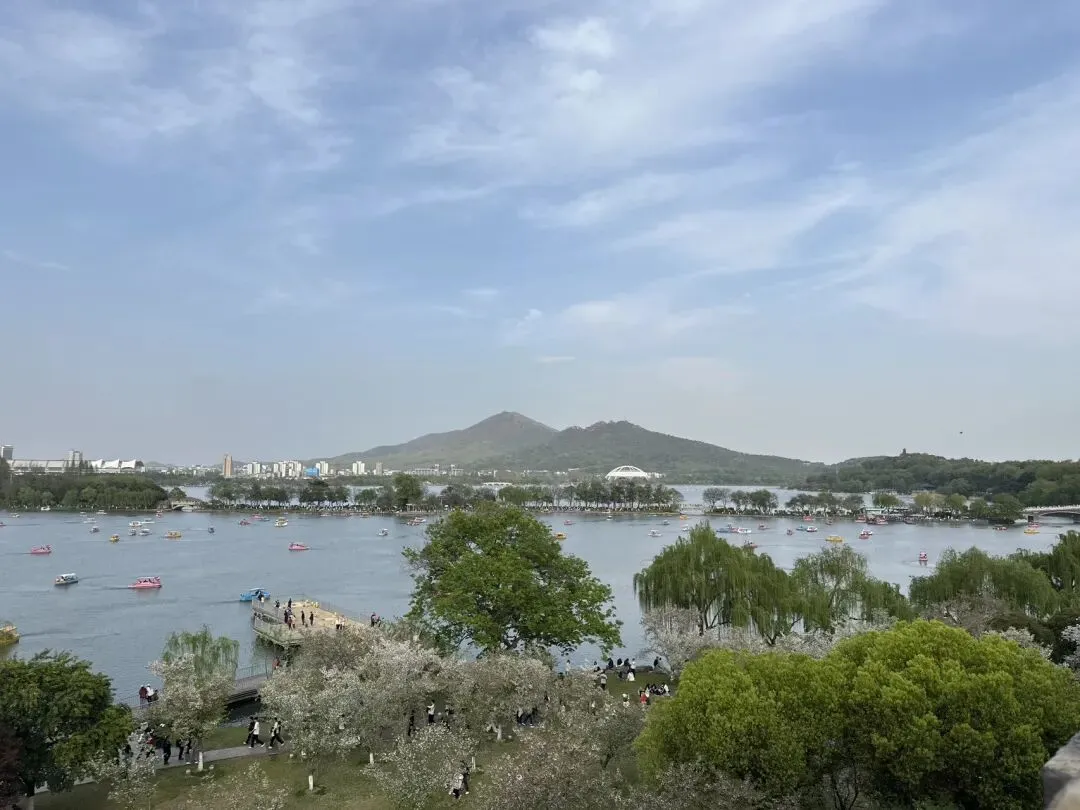
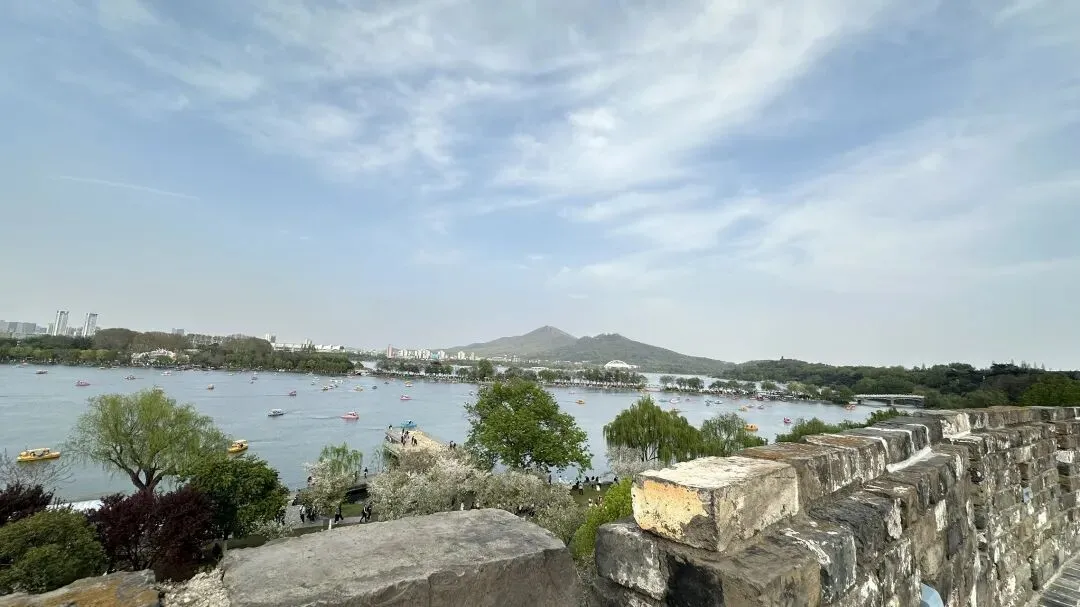
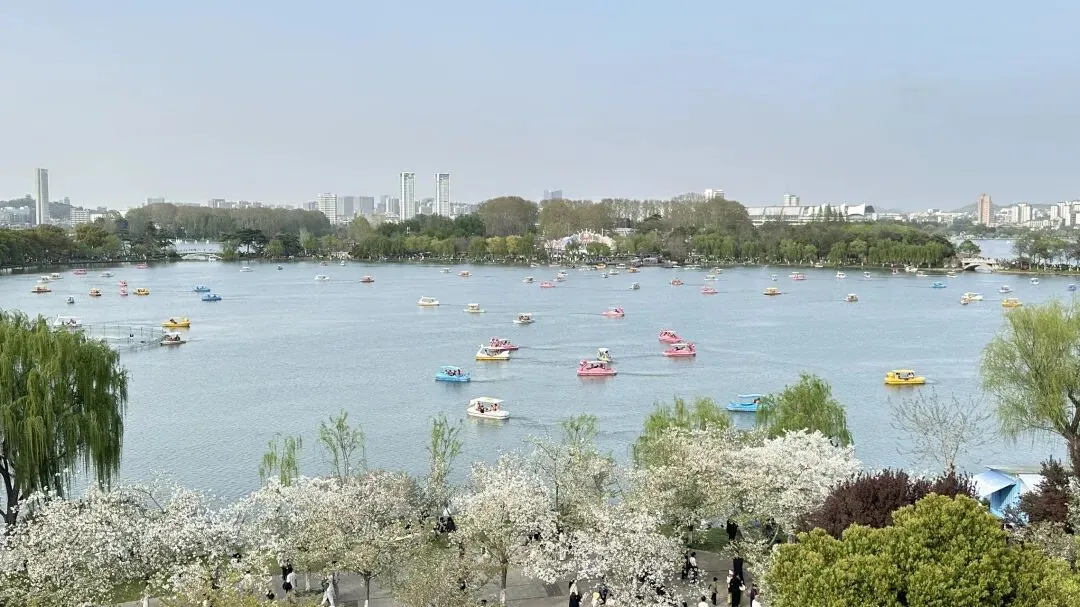
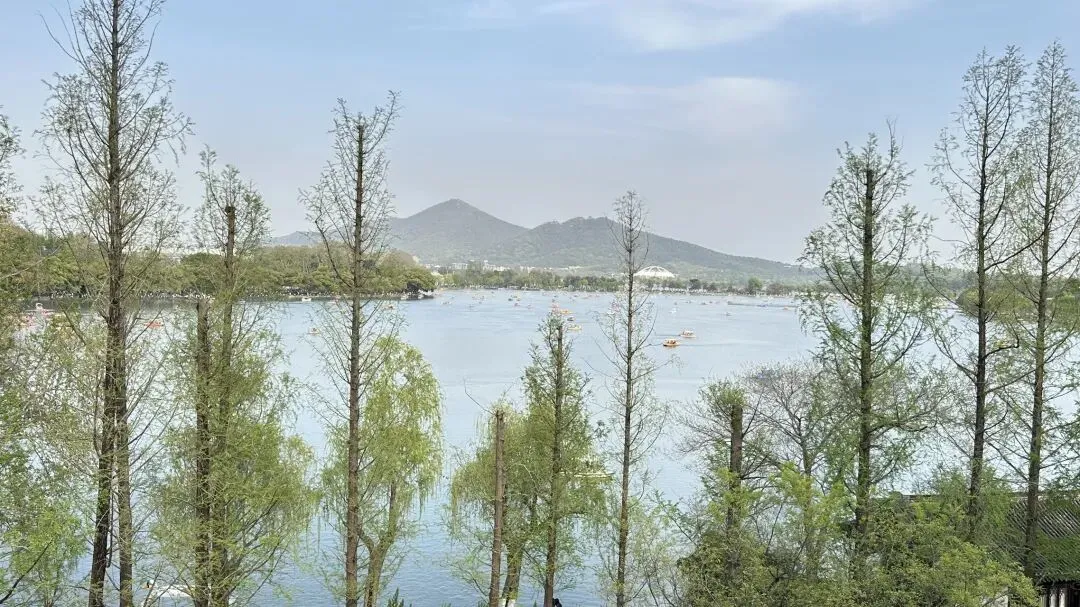
玄武湖(Xuanwu Lake)位于南京市玄武区,东枕紫金山、西靠明城墙、北邻南京站、南倚覆舟山,是江南三大名湖之一,与杭州西湖、嘉兴南湖齐名。
它是中国最大的皇家园林湖泊、仅存的江南皇家园林,被誉为“金陵明珠”,现为国家AAAA级旅游景区、国家重点公园。景区总面积5.13平方千米,湖面3.78平方千米,湖中有环洲、樱洲、菱洲、梁洲、翠洲五块绿洲,洲堤桥相连,浑然一体。
玄武湖历史超2300年,先秦时已有记载;六朝为皇家园林与水师阅武场;明朝是皇家禁地“后湖黄册库”;清末正式开放为公园。古有“环洲烟柳、樱洲花海、梁洲秋菊”等胜景,兼具湖光、山色、城垣、林泉之美,是南京“山水城林”的核心代表。
English Introduction
Xuanwu Lake is situated in Xuanwu District, Nanjing. Bounded by Zijin Mountain to the east, the Ming City Wall to the west, Nanjing Railway Station to the north, and Fuzhou Mountain to the south, it stands as one of the Three Famous Lakes in the Jiangnan Region, alongside West Lake in Hangzhou and Nanhu Lake in Jiaxing.
As China’s largest imperial garden lake and the only surviving imperial garden in Jiangnan, it is honored as the Pearl of Jinling. The scenic area spans 5.13 km², with a 3.78 km² lake surface dotted by five islets: Huanzhou, Yingzhou, Lingzhou, Liangzhou, and Cuizhou, all connected by causeways and bridges.
With over 2,300 years of history, Xuanwu Lake was recorded as early as the Pre-Qin Period. It served as an imperial garden and naval training ground during the Six Dynasties, a restricted imperial archive (Huangce Library) in the Ming Dynasty, and opened to the public as a park in the late Qing Dynasty. Renowned for classic scenes like Willow Mist on Huanzhou and Flower Sea on Yingzhou, it epitomizes Nanjing’s harmonious landscape of “mountains, water, city, and forest.”