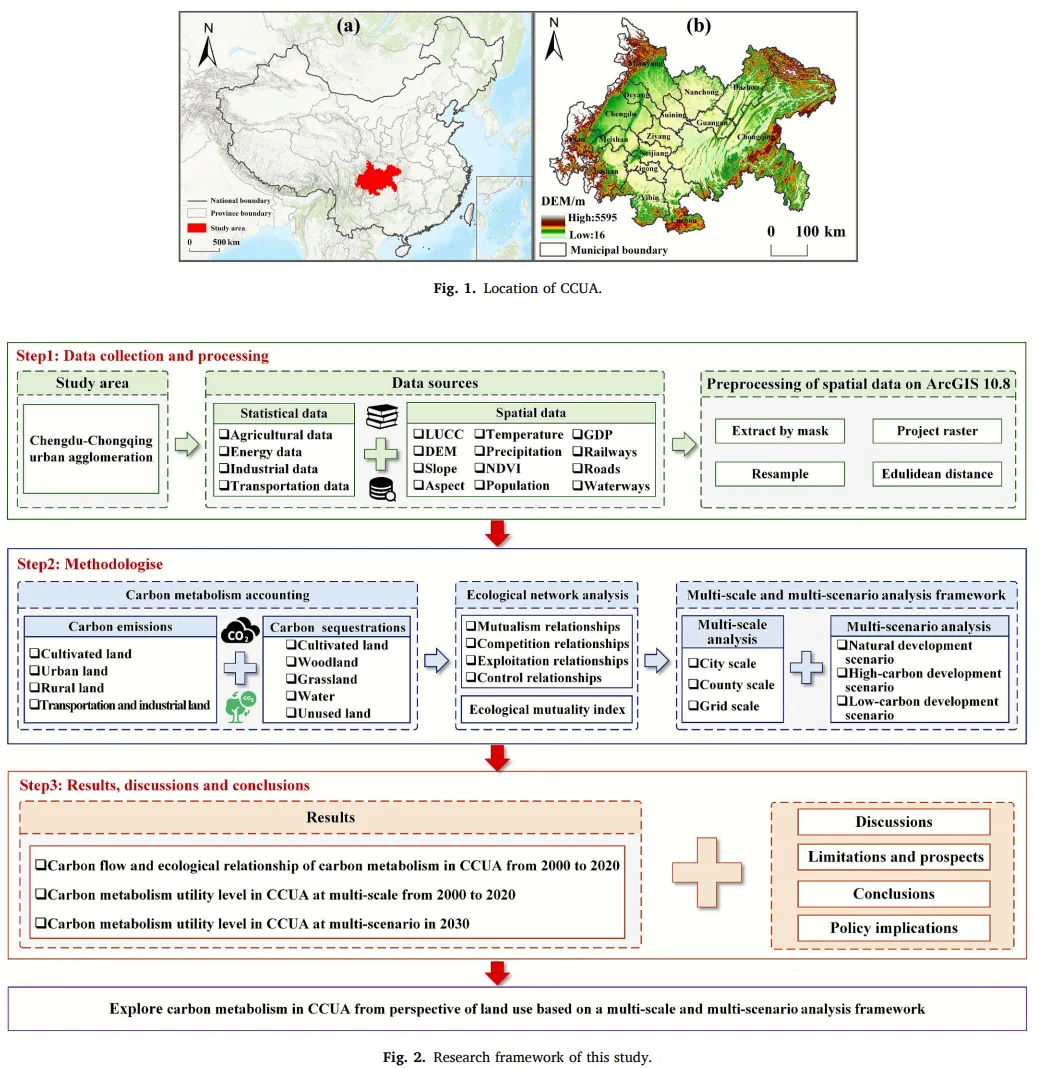
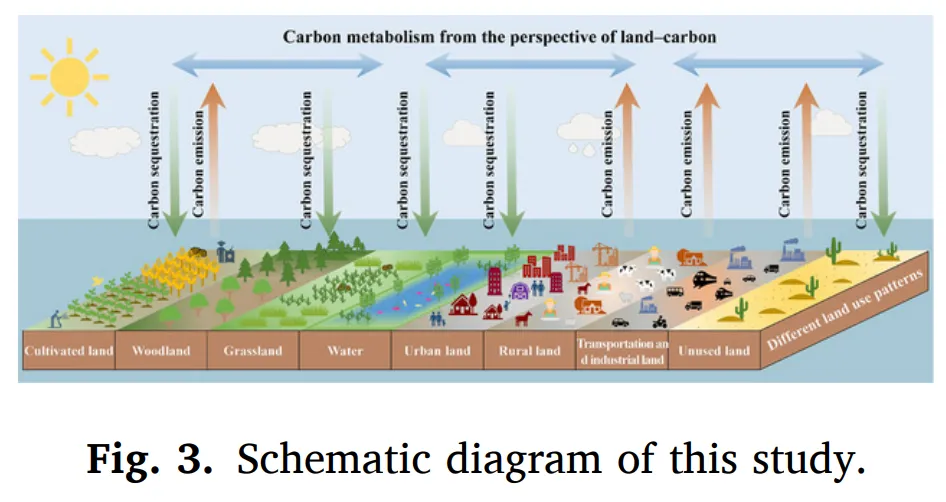
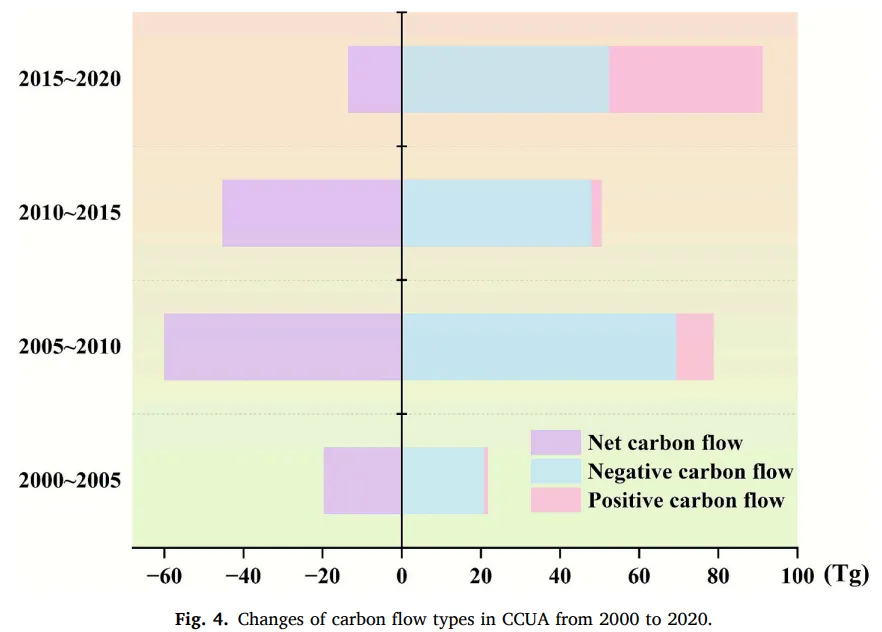
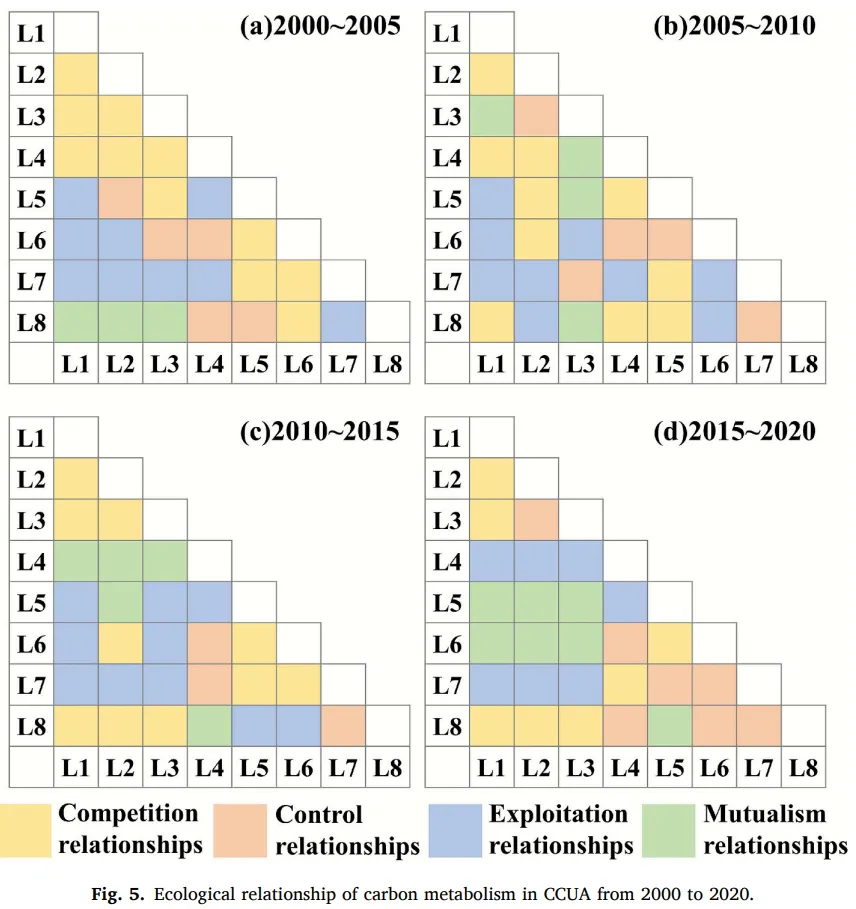
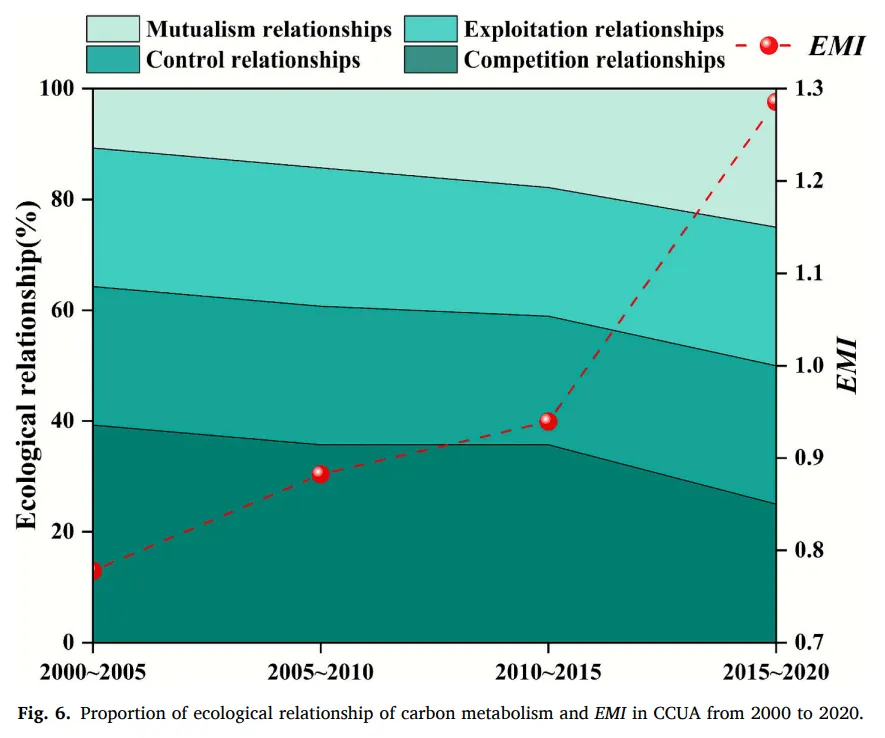
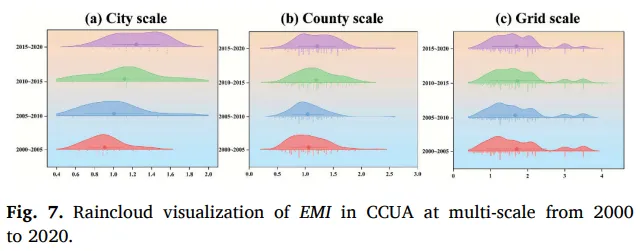
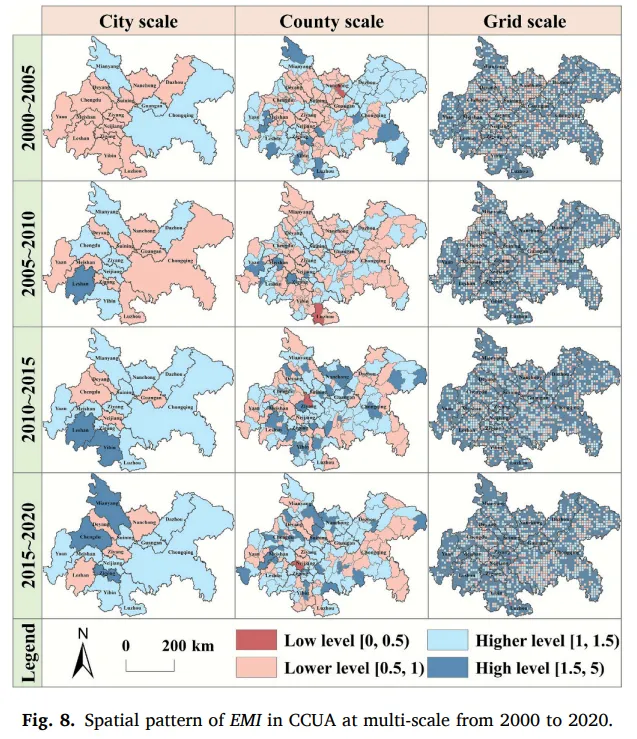
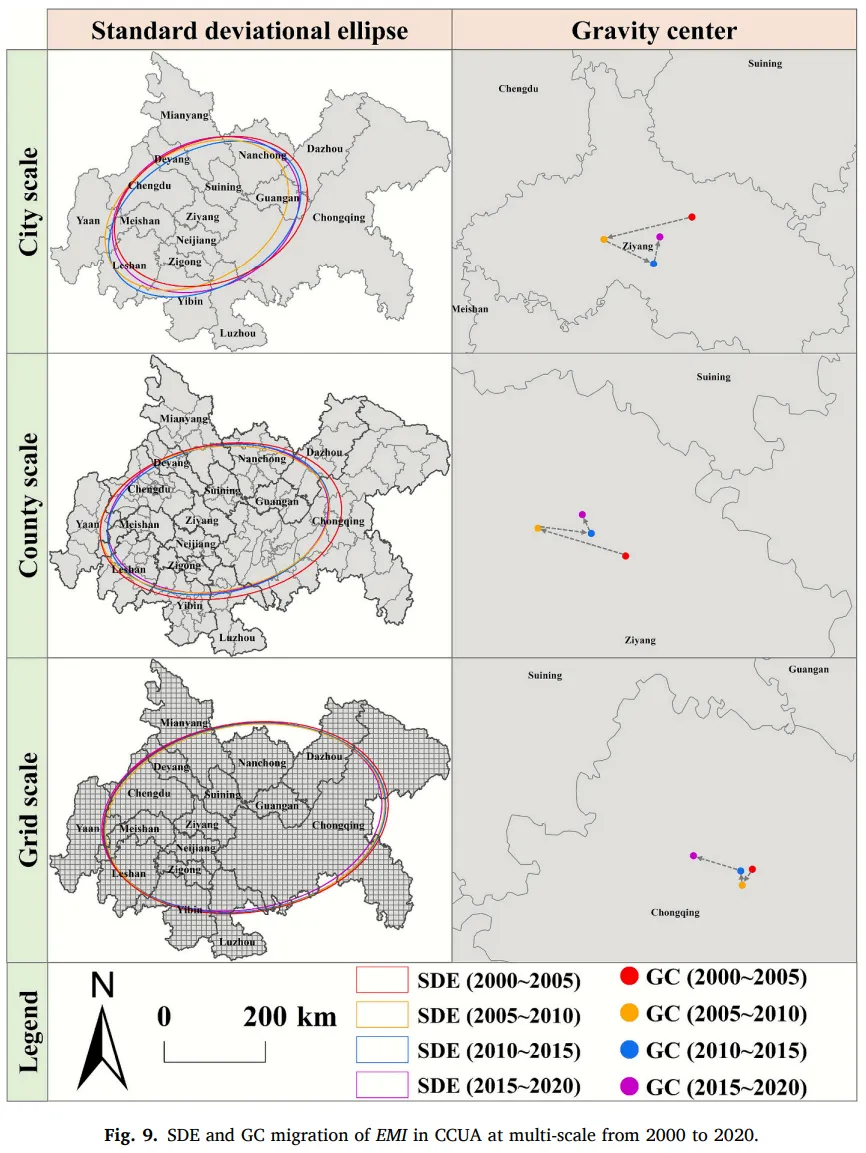
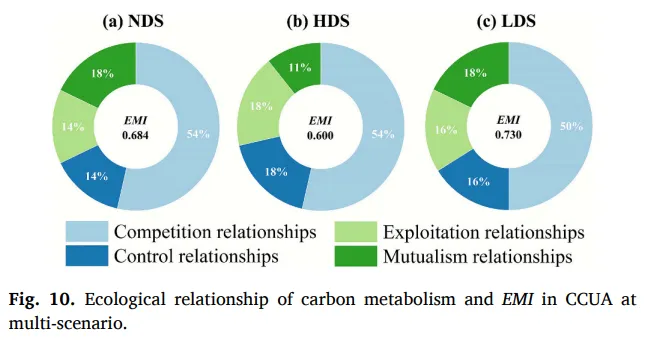
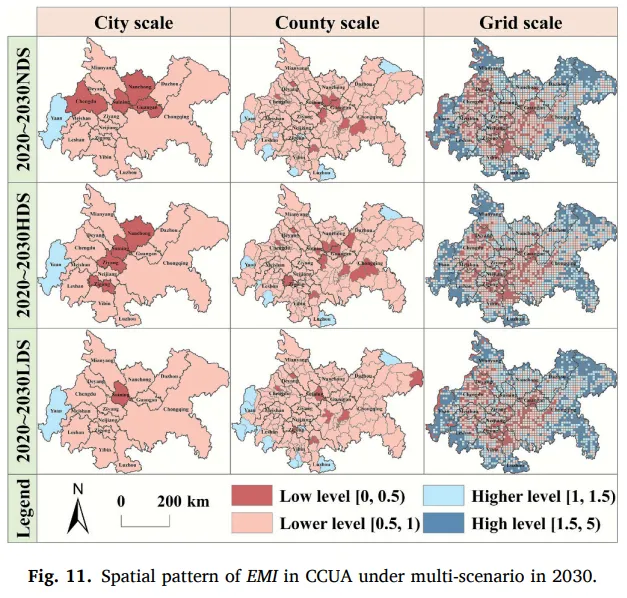
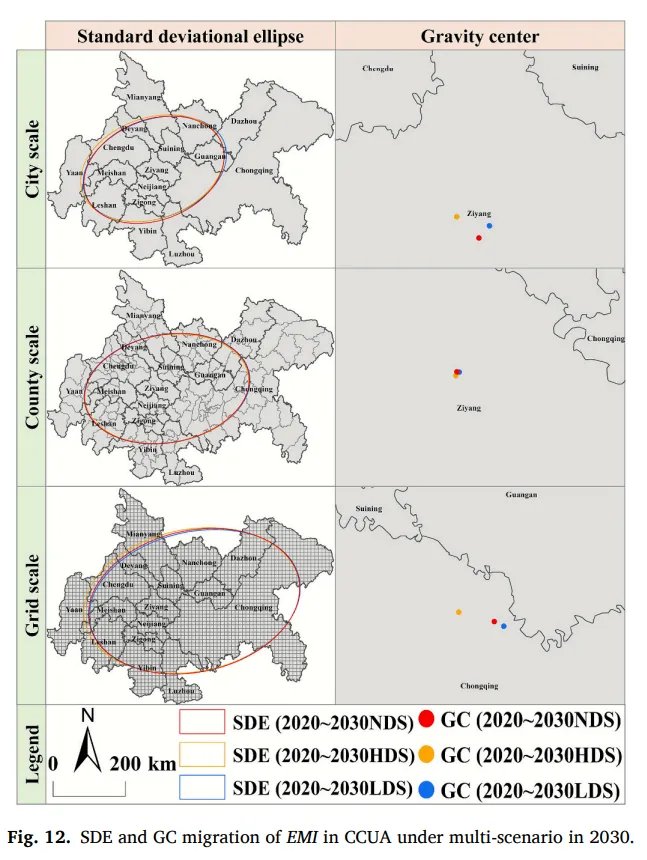
Exploring multi-scale and multi-scenario analysis of carbon metabolism in urban agglomerations is crucial for achieving low-carbon development. However, existing researches mainly focus on single-scale and historical period analysis, lacking of multi-scale and multi-scenario predictions of carbon metabolism based on land use. Therefore, this research focuses on Chengdu-Chongqing urban agglomeration (CCUA) and uses carbon metabolism accounting, ecological network analysis, and Markov-PLUS to construct a multi-scale and multi-scenario analysis framework to analyze carbon metabolism characteristics of CCUA. The findings suggest that: (1) Positive carbon flow of CCUA from 2000 to 2020 is smaller than negative carbon flow, and net carbon flow remains consistently negative (−13.57 ∼ −60.02 Tg). Ecological relationship of carbon metabolism of CCUA is mainly determined with control and exploitation relationships, and the proportion remains stable at about 50 %. Ecological mutual index (EMI) of CCUA showed significant growth, steadily increasing from 0.78 to 1.28. (2) Carbon metabolism has obvious spatial scale effects. EMI at different scales shows different spatial differentiation and diffusion characteristics. In addition, standard deviation ellipse of EMI contracted from large to small at all scales, and gravity center (GC) shows a trend of migrating to western region. (3) From EMI ranking results, low-carbon development scenario (0.730) > natural development scenario (0.684) > high-carbon development scenario (0.600). GC of EMI among different scenarios is relatively close, located in Ziyang and Chongqing. The research findings can offer a scientific foundation for low-carbon development and optimal allocation of land resources in CCUA, and provide a reference for other urban agglomerations.