南京林业大学汪希伟博士等:基于交替背光与正面光照明及振动辅助的中国典型杨树品种机器视觉高通量种子表型性状测量
- 2026-10-03 12:08:35
汪希伟1*, Mubikayi Muhong Horly1,李赞鹏1,赵茂程1,吴斌1,王梦梦1,邓家乐1,乔梦梦1,陈霄1,路永杰1,齐亮1,谢文俊1,邹红艳1,张妍2,彭儒胜2
(1. 南京林业大学,南京210037,中国;
2. 辽宁省杨树研究所,盖州115213,辽宁,中国)
摘要:2024年,从全国范围内收集了主要品种的杨树种子,构建了包含超过118.7万张图像的单粒杨树种子图像数据库,并于国家林业和草原科学数据中心发布。为此,该研究搭建了一套新型机器视觉系统,该系统内含柔性振动盘,并采用背光与正面交替照明方式成像。通过振动辅助,批量调整种子的位姿,得以最大限度减少种子间的搭接或重叠现象在成像过程中发生;同时,借助交替方式照明,既从背光剪影图像中精确捕获了种子的轮廓特征,又从正面光彩色图像中准确提取了其颜色特征。
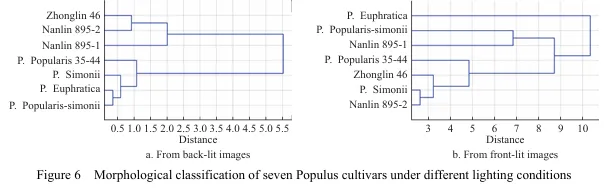
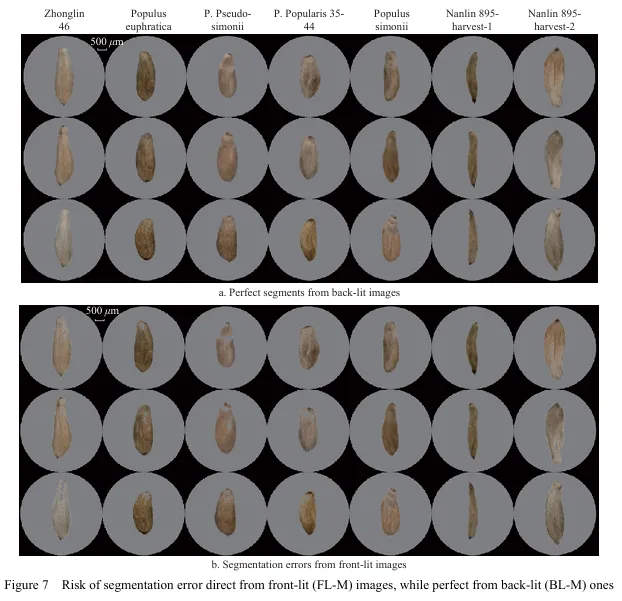
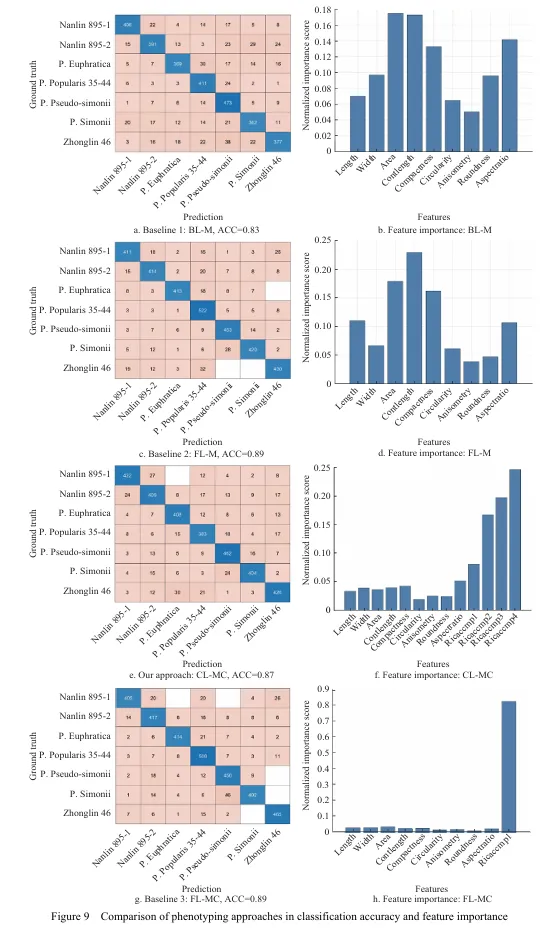
为探究照明的方向性对种子表型分析的影响,分别仅使用常规正面照明图像以及从交替照明的背光与正面照明图像组中提取杨树种子的形态学指标与颜色指标,并将二者分别用于区分不同杨树品种的分类对比研究中。结果表明,背光在特征图像的可靠分割与形态学指标的精确测量方面表现优越,尤其在聚类树状图中清晰揭示出南林895与中林46之间的亲缘关系,与二者兼具有欧美杨的遗传来源相呼应。相比之下,正面照明图像则因种子颜色差异的动态范围极大,易出现偶发性分割缺陷,导致形态学特征测量的不确定度增加,进而使聚类结果丢失了其遗传关联性。
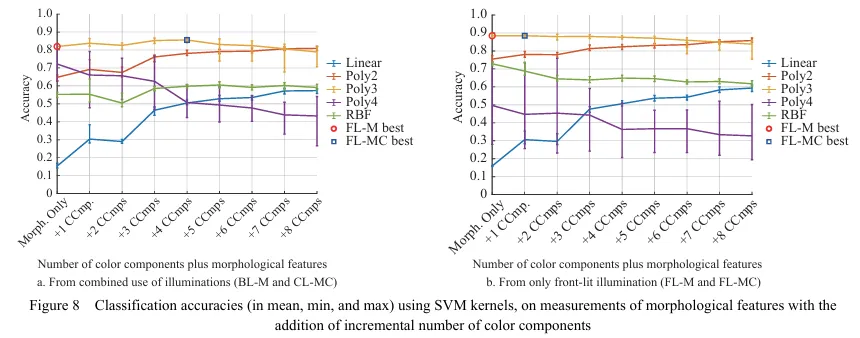
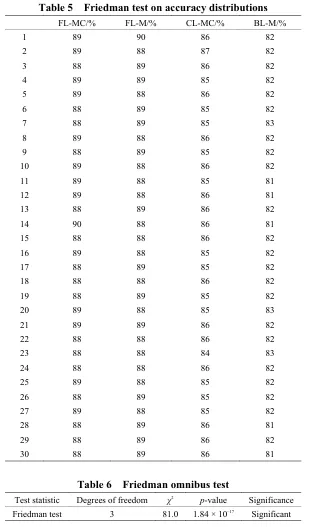
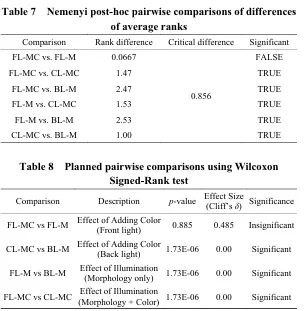
采用该交替照明方式创建的图像数据集的表型特征捕捉能力还进一步体现在:仅利用背光形态学测量值进行简单的支持向量机分类,即可获得0.819的良好准确率;而当加入对应正面照明彩色图像的颜色指标后,准确率显著提升至0.856。该研究建立的振动辅助交替照明方案,成功捕捉了我国杨树种子主要品种间的细微差异,亦可推广应用于其他小粒谷物的高质量成像中,可为在大规模育种计划和遗传学研究中的高通量表型分析提供参考基础。
关键词:杨树种子;机器视觉;相机标定;柔性振动盘;背光与正面光照明
DOI: 10.25165/j.ijabe.20261901.9850
引用信息: Wang X W, Horly M M, Li Z P, Zhao M C, Wu B, Wang M M, et al. High-throughput seed phenotyping of Populus cultivars in China using vibration-assisted machine vision with alternating back-lit and front-lit illuminations. Int J Agric & Biol Eng, 2026; 19(1): 197–212.
High-throughput seed phenotyping of Populus cultivars in China using vibration-assisted machine vision with alternating back-lit and front-lit illuminations
Xiwei Wang1*, Mubikayi Muhong Horly1, Zanpeng Li1, Maocheng Zhao1, Bin Wu1, Mengmeng Wang1, Jiale Deng1, Mengmeng Qiao1, Xiao Chen1, Yongjie Lu1, Liang Qi1, Weijun Xie1, Hongyuan Zou1, Yan Zhang2, Rusheng Peng2
(1.College of Mechanical and Electronic Engineering, Nanjing Forestry University, Nanjing 210037, China;
2. Liaoning Institute of Poplar Research, Gaizhou 115213, Liaoning, China)
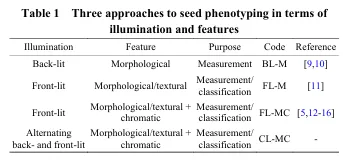
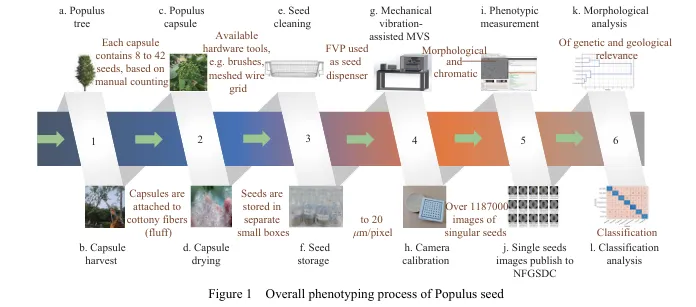
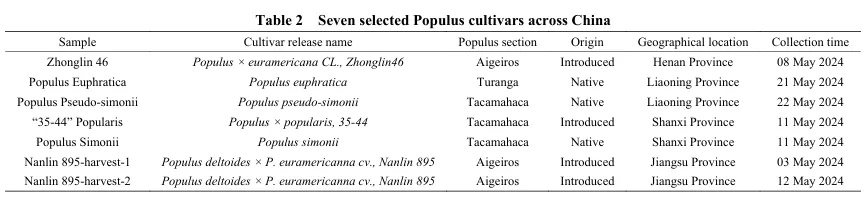
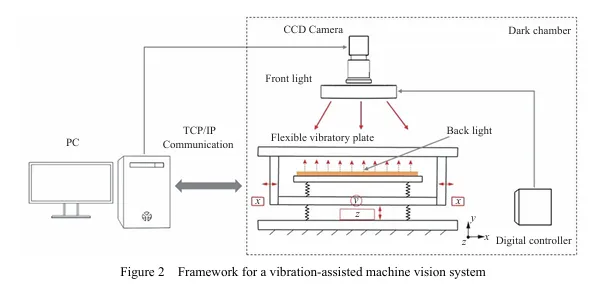
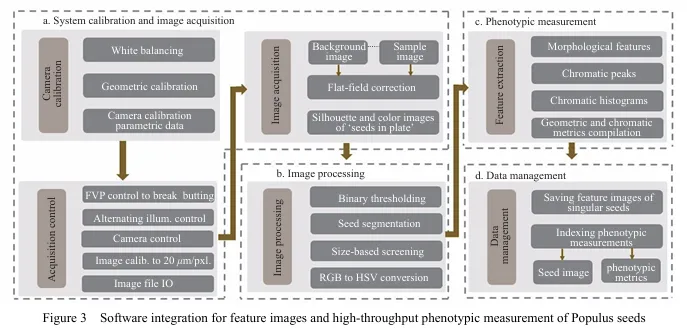
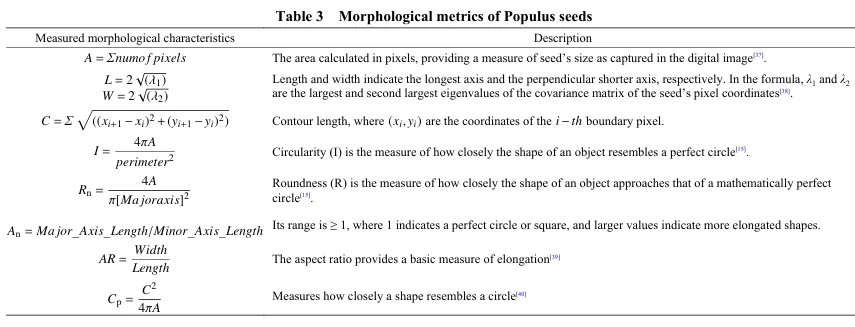
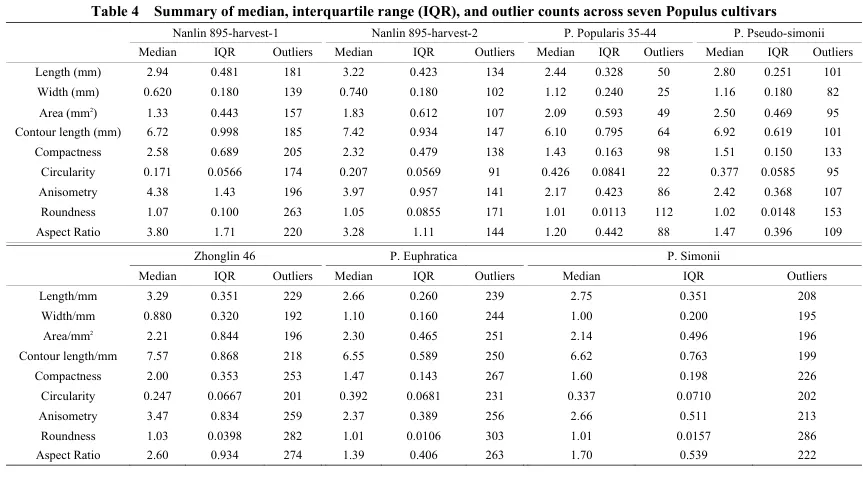
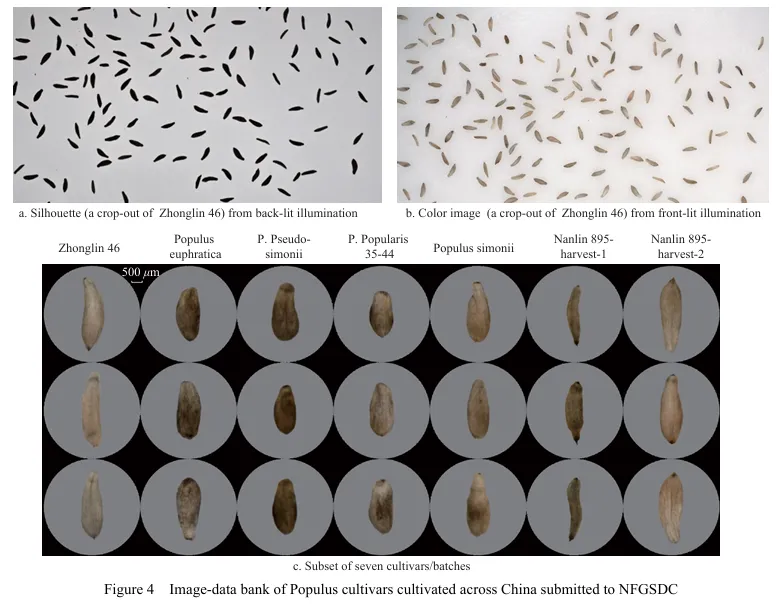
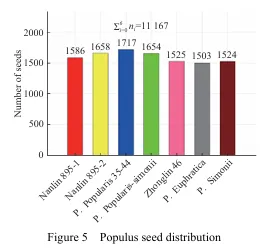
Abstract: Seeds of major Populus cultivars were collected from across China in 2024 to build the image-data bank of over 1 187 000 images of singular seeds for the National Forestry and Grassland Science Data Center (NFGSDC). An innovative vibration assisted machine-vision system was built with alternating back-lit and front-lit illumination, which incorporated a flexible vibratory panel (FVP) to manipulate the multitude of seeds to minimize the occurrence of butting or overlapping, and the lighting from alternating directions to capture phenotypic features both in silhouettes and in vivid color images. To investigate how illumination directions would affect phenotyping, morphological and chromatic metrics were measured, respectively from only the common front-lit images and through the combined use with back-lit images, and applied to distinguish different cultivars and harvest-batches. Results verified that back-lit excelled for reliable segmentation for feature images and accurate morphological metrics, especially when the closeness was clearly revealed in the clustering dendrogram between Nanlin 895 and Zhonglin 46, which shared a common genetic sourcing from P. Euramericana. In contrast, front-lit images were prone to occasional segmentation defects leading to inaccurate morphological measurements due to the highly dynamic range of seed colors, which caused the clustering to lose the genetic relevance. The power of the image-dataset of alternating illuminations was further demonstrated when a decent accuracy of 0.819 yielded from the simple support-vector-machine classification while working on only the back-lit morphological measurements, and the increase to 0.856 with statistical significance if with the addition of chromatic metrics from corresponding front-lit color images, while other image characteristics had been strictly held back. The vibration-assisted alternating illumination protocol established in this work to capture delicate seed-features of Populus cultivars may also be applied to other small grains facing similar imaging challenges, laying a sturdy step-stone of high throughput phenotyping for large-scale breeding programs and genetic studies.
Keywords: Populus seed, machine vision, camera calibration, flexible vibratory plate, back-lit and front-lit illumination
DOI: 10.25165/j.ijabe.20261901.9850
Citation:Wang X W, Horly M M, Li Z P, Zhao M C, Wu B, Wang M M, et al. High-throughput seed phenotyping of Populus cultivars in China using vibration-assisted machine vision with alternating back-lit and front-lit illuminations. Int J Agric & Biol Eng, 2026; 19(1): 197–212.
END

点赞
收藏
分享