Plant Biotechnology Journal., 27 Apr 2026
PbrIDD2-PbrAPX14Module Functions in the Ethylene-Mediated Ripening and Senescence Process of Pear Fruit
Author
Libin Wanga, Junpeng Niub, Xiaoyu Tan…Guodong Wang, Yuanyuan Guo, Shaoling Zhanga.
a:College of Horticulture, Nanjing Agricultural University, Nanjing, Jiangsu, China.
b:College of Life Sciences, Engineering Research Center of High Value Utilization of Western China Fruit Resources, Ministry of Education, Shaanxi Normal University, Xi'an, China.
Abstract
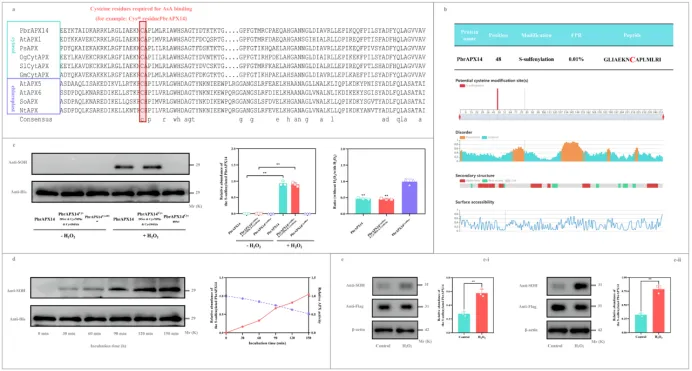
Endogenous H2O2 participated in the ethylene-dependent ripening and senescence process of horticultural fruit as a secondary messenger; however, the molecular mechanism beneath such a phenomenon has not been fully clarified until recently. By a conjoint analysis of metabolite, enzyme activities, gene expression profiles in AsA-GSH cycle of ‘Kolar’ pear, PbrAPX14 might act as a negative factor in the ethylene-mediated H2O2 accumulation. PbrAPX14, located in cytosol, would reduce H2O2 in vitro and in vivo, inhibit ethylene production, and thus fruit ripening and senescence. After analysing the expression profiles of the differentially expressed transcription factors (TFs) followed by experimental validation, the nuclear PbrIDD2 could directly bind to the cis-acting element (core motif: TTTGTCG) in PbrAPX14 promoter, activate its expression and thus enhance the H2O2-scavenging capacity of fruit/calli, which was associated with the mitigated ethylene evolution and fruit ripening and senescence. Further study explored that the H2O2-mediated post-translational S-sulfenylation of Cys48 residue in PbrAPX14, which mitigated its function, existed in vitro and in vivo, and was upregulated by ethylene, facilitating endogenous H2O2 accumulation. Overall, our results implied that both transcriptional and post-translational regulation of PbrAPX14, which were (in)directly under the control of ethylene, functioned in pear ripening and senescence process via regulating endogenous H2O2 level.






 10个月宝宝每天需要喝多少奶粉?

