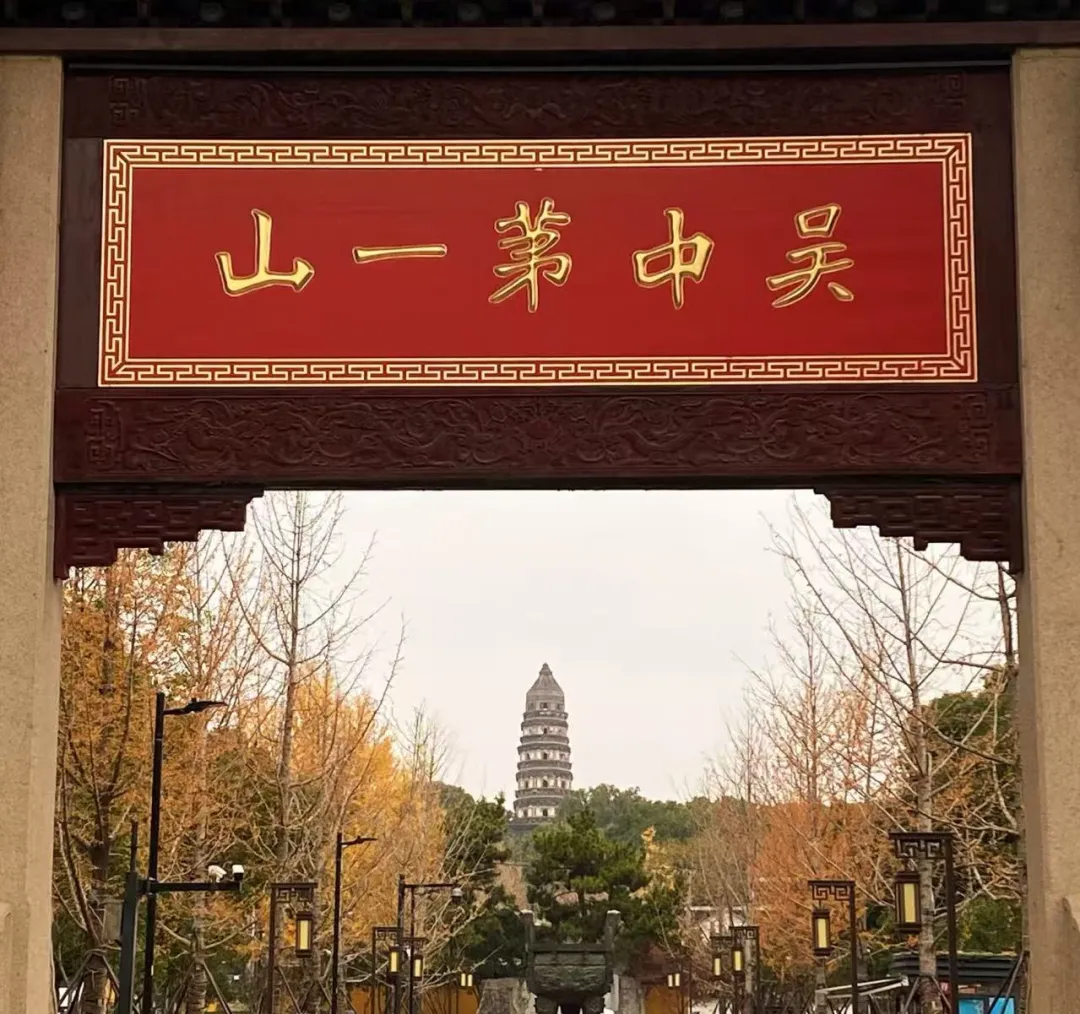
虎丘,位于江苏省苏州市西北郊,距今已有2500多年历史,是中国历史上最负盛名的文化名丘之一。
Tiger Hill, located in the northwestern suburbs of Suzhou in Jiangsu Province, has a history of over 2,500 years and is one of the most celebrated cultural landmarks in Chinese history.
有“吴中第一山”的美誉。It has long been honored as “the foremost hill of the Wu region.”
被苏轼赞为:“到苏州不游虎丘,乃憾事也。”The renowned Song Dynasty scholar Su Shi once praised it, saying: “A visit to Suzhou is incomplete without seeing Tiger Hill.”
虎丘海拔仅34.3米,却因帝王陵寝、吴越争霸、佛教文化、文人墨客在此交汇,被誉为:
Although Tiger Hill rises only 34.3 meters above sea level, it has earned extraordinary fame as a place where royal tombs, the rivalry between the ancient states of Wu and Yue, Buddhist traditions, and generations of scholars and poets all converge.
For this reason, Tiger Hill is often praised as:“An open-air museum of Chinese history and culture”
虎丘原名 “海涌山”。
Tiger Hill was originally known as Haiyong Hill.
相传在春秋末年(公元前496年),吴国国君阖闾葬于此地。According to legend, in 496 BC, during the late Spring and Autumn Period, King Helü of the State of Wu was buried here.
葬后三日,有白虎蹲踞其上,故名——虎丘。Three days after the burial, a white tiger was said to have appeared, crouching on the hilltop, and the hill was thereafter called Tiger Hill.
在中国传统文化中,白虎象征:In traditional Chinese culture, the white tiger symbolizes:
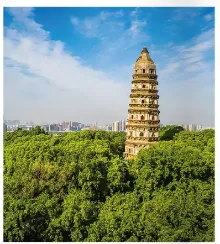
The Yunyan Temple Pagoda, also known as the Tiger Hill Pagoda, stands on the summit of Tiger Hill in Suzhou. First built in 959 AD, it is one of the oldest surviving brick pagodas in China.
虎丘塔为八角七层仿木结构砖塔,通高约 47米。因地基不均,塔身逐渐倾斜,被誉为**“中国的比萨斜塔”**。The pagoda is an octagonal, seven-story brick structure about 47 meters tall. Due to uneven ground, it gradually tilted over time and is often called “the Leaning Tower of Pisa of China.”
尽管倾斜明显,虎丘塔历经多次地震,至今屹立不倒,成为苏州历史与文化的重要象征。Despite its visible lean, the pagoda has survived several earthquakes and remains standing today, serving as an enduring symbol of Suzhou’s history and culture.