农业农村部南京农机所梅松副研究员等:枸杞采收机振动部件优化设计与试验
- 2026-10-06 03:08:42
田志成1,梅松2*,宋志禹2,沈成2,潘程浩1,童一飞1
(1. 南京理工大学机械工程学院,南京210094,中国;
2. 农业农村部南京农业机械化研究所,南京210014,中国)
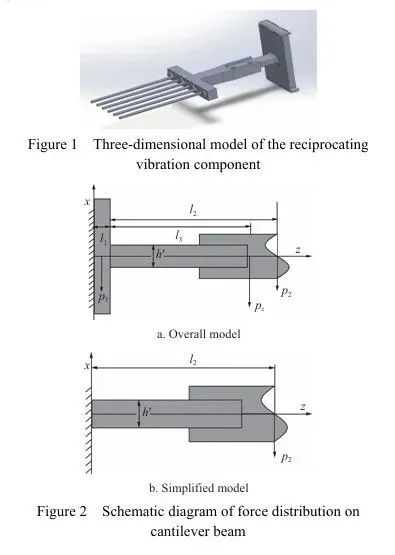
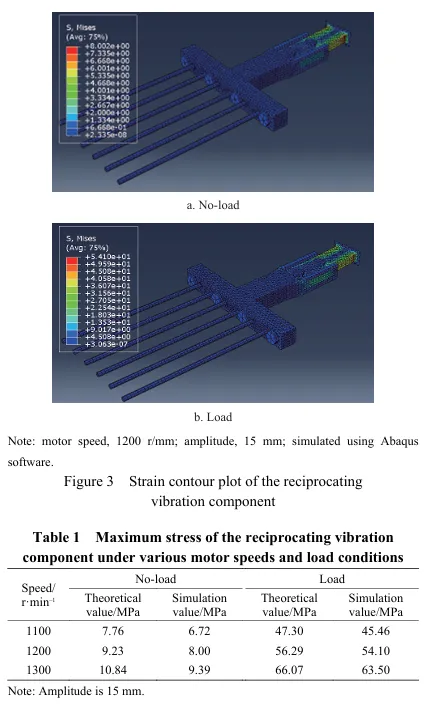
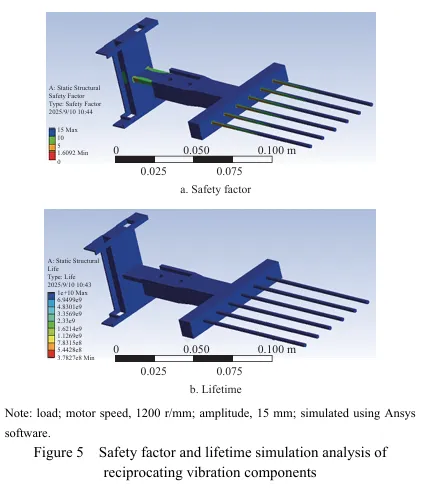
摘要:枸杞采收机直线往复振动部件存在断裂风险且相较于负载作业消耗功率更显著,为了提高振动装置的工作性能,对振动部件进行优化研究。首先,结合振动部件结构组成特征,构建悬臂梁受力及应力求解模型,并通过Abaqus软件对在空载及负载工况下的部件进行仿真,通过理论与仿真对比分析应力集中点数值结果,确定模型准确性且滑块材料应选钢材。
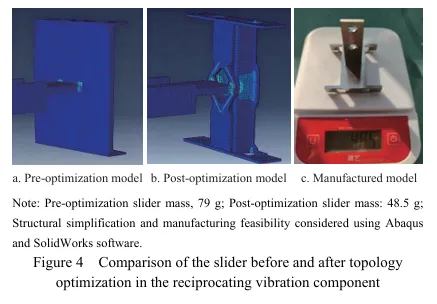
其次,利用Abaqus拓扑优化模块对钢材滑块进行轻量化改进,在保证强度的前提下,减重38.61%。
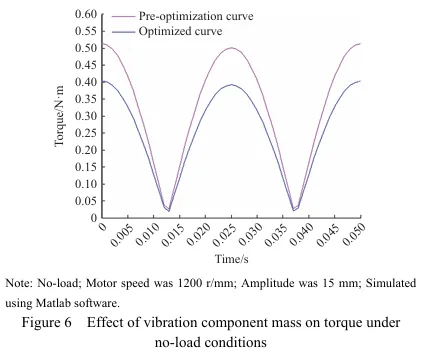
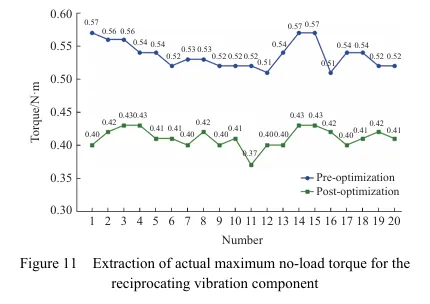
最后,通过Matlab计算在空载情况下优化前后的振动部件最大扭矩分别为0.52 N∙m和0.42 N·m,与之对应功耗降低了19.23%。
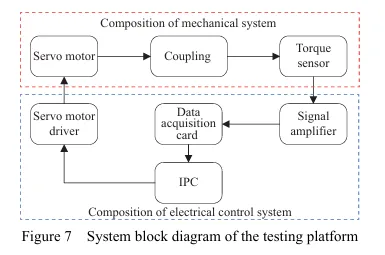
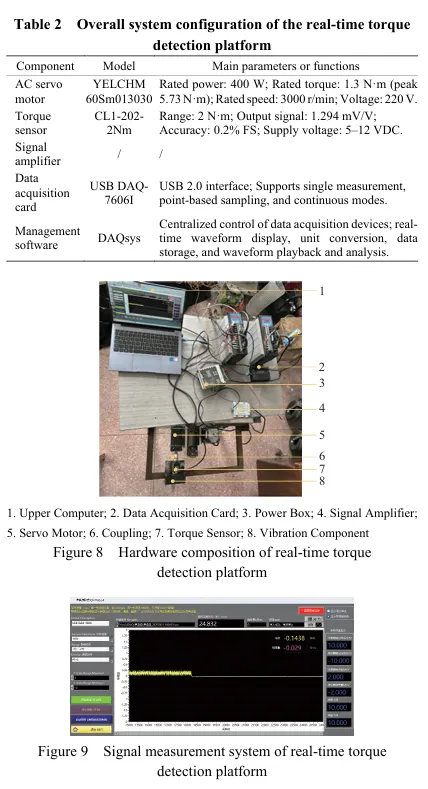
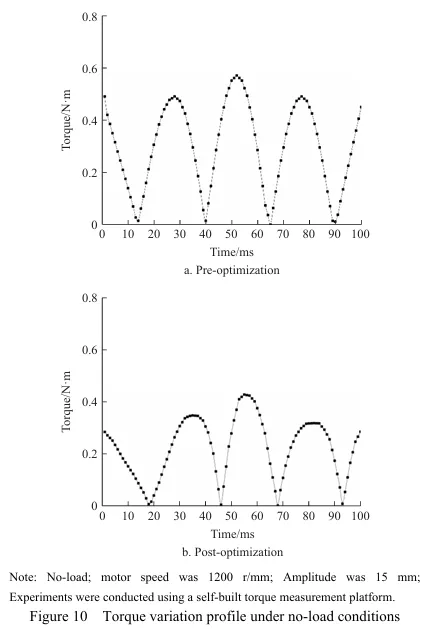
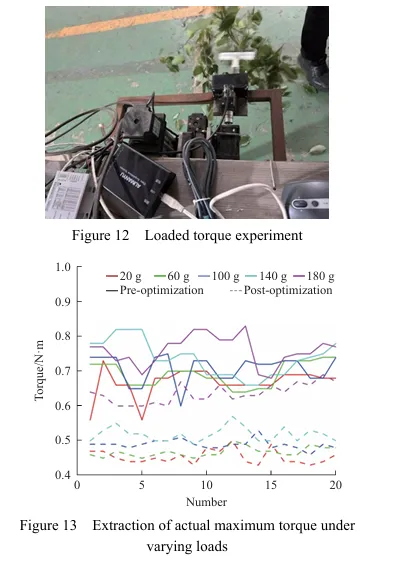
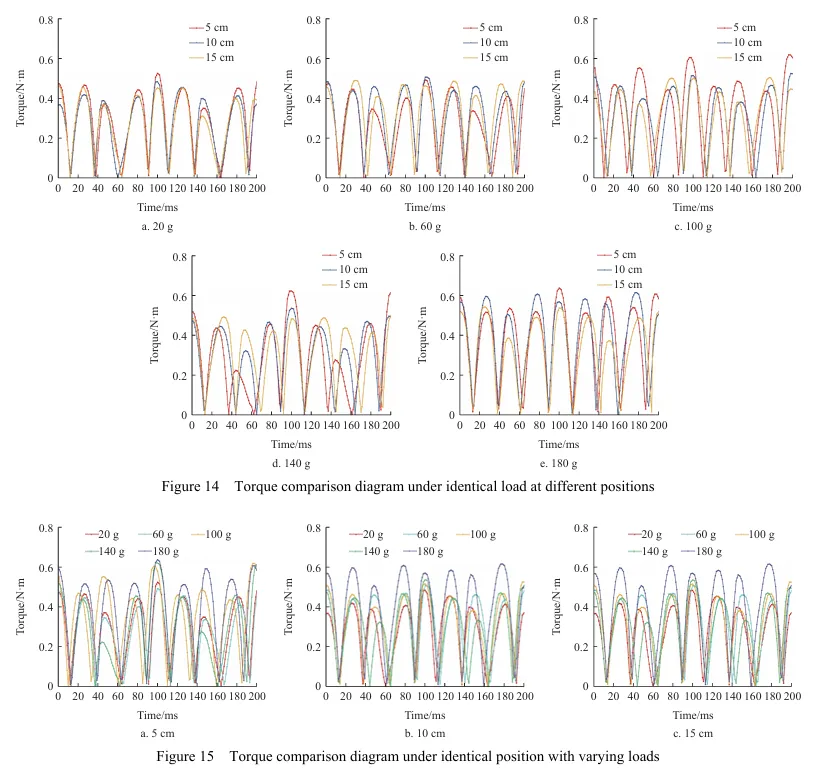
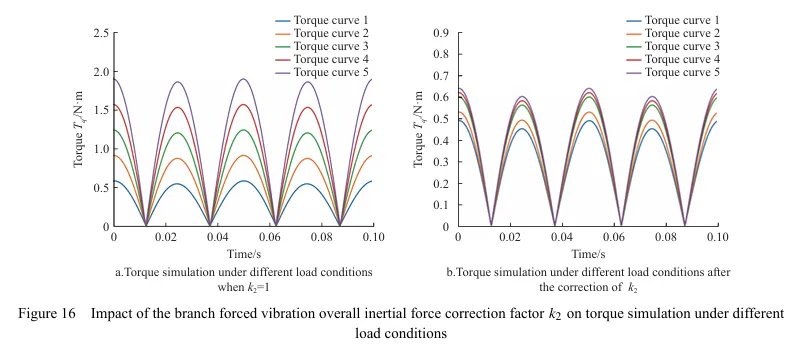
利用搭建扭矩检测平台进行扭矩检测,试验表明:在空载情况下优化前后往复振动部件的最大扭矩分别为0.57 N·m和0.43 N·m,功耗降低了24.56%;在180 g最大负载情况下的最大扭矩分别为0.83 N∙m和0.69 N∙m,功耗降低了16.87%;驱动扭矩随作业位置的增加而减小,随枝条质量的增加而增加;拟合获取修正系数k2关于负载m4的关系,获得负载条件扭矩修正模型,进一步建立能耗修正模型,可为驱动电机选型和作业能效优化提供科学依据,对振动采收部件的研发有一定的参考价值。
关键词:枸杞;往复振动部件;应力分析;扭矩;功耗
DOI: 10.25165/j.ijabe.20251806.10008
引用信息: Tian Z C, Mei S, Song Z Y, Shen C, Pan C H, Tong Y F. Optimization design and test of vibration components in a Chinese wolfberry harvester. Int J Agric & Biol Eng, 2025; 18(6): 94–103.
Optimization design and test of vibration components in a Chinese wolfberry harvester
Zhicheng Tian1, Song Mei2*, Zhiyu Song2, Cheng Shen2, Chenghao Pan1, Yifei Tong1
(1. School of Mechanical Engineering, Nanjing University of Science and Technology, Nanjing 210094, China;
2. Nanjing Institute of Agricultural Mechanization, Ministry of Agriculture and Rural Affairs, Nanjing 210014, China)
Abstract: Linear reciprocating vibration components in Chinese wolfberry harvesters are susceptible to fractures and exhibit high power consumption relative to operational loads. To enhance the operational performance of the vibration apparatus, comprehensive optimization research was conducted on the vibration components. First, a cantilever beam force and stress analysis model was developed based on the structural composition characteristics of vibration components. Simulations under both no-load and load conditions were performed using Abaqus software. Comparing theoretical and simulation results identified stress concentration points, confirming the model’s accuracy and indicating that steel is the ideal material for the slider. Next, topology optimization of the steel slider using Abaqus resulted in a 38.61% weight reduction while maintaining the required strength. Finally, Matlab calculations revealed that the maximum torque of the vibration component before and after optimization under no-load conditions was 0.52 N·m and 0.42 N·m, respectively, leading to a 19.23% reduction in power consumption. Torque detection tests conducted using a custom-built torque measurement platform indicated that under no-load conditions, the maximum torque before and after optimization was 0.57 N·m and 0.43 N·m, corresponding to a 24.56% reduction in power consumption. Under a 180 g maximum load, the maximum torque was 0.83 N·m and 0.69 N·m, resulting in a 16.87% reduction in power consumption. The driving torque decreased as the operating position increased and increased with higher branch mass. By fitting the relationship between the correction factor k2 and the load m4 , a torque correction model under load conditions was obtained. Furthermore, an energy consumption correction model was established, providing a scientific basis for motor selection and operational energy efficiency optimization, and serving as a valuable reference for the development of vibration harvesting components.
Keywords: Chinese wolfberry, reciprocating vibration component, stress analysis, torque, power consumption
DOI: 10.25165/j.ijabe.20251806.10008
Citation:Tian Z C, Mei S, Song Z Y, Shen C, Pan C H, Tong Y F. Optimization design and test of vibration components in a Chinese wolfberry harvester. Int J Agric & Biol Eng, 2025; 18(6): 94–103.
END

点赞
收藏
分享
随机文章
-
 10个月宝宝每天需要喝多少奶粉?
- 南京水利科学研究院获第四届马鞍山市防震减灾科普宣讲比赛一等奖
- IF45.8!恭喜!南京大学团队登顶《Science》!揭开UC发病的全新机制!
- 南京•阅江楼
- 2026南京传媒学院国际本科- 韩国艺术名校预科1+4学制,面向海内外应、往届高中毕业生或完成高中二年级学业学生,及具备高中同等学力者
- 南京大巴线路
- 南京救护车出租转运服务流程推荐:长途护送、遗体转运、出院转院、医院救护车价格(私人120救护车出租)
- 【研途传真】第十二届南京中医药大学信息检索大赛即将举办
- 【项目申报】南京市人力资源和社会保障局关于组织开展2026年度市级乡土人才大师工作室申报工作的通知
- 不要踩,快躲开!南京街头正大量出现
- 招44人!南京中医药大学2026年科研助理招聘公告

