南京大学鲁艺/孙为银/斯克利普斯研究所余金权JACS Au:通过SET和CMD途径实现吲哚啉的C5和C7位硫化反应
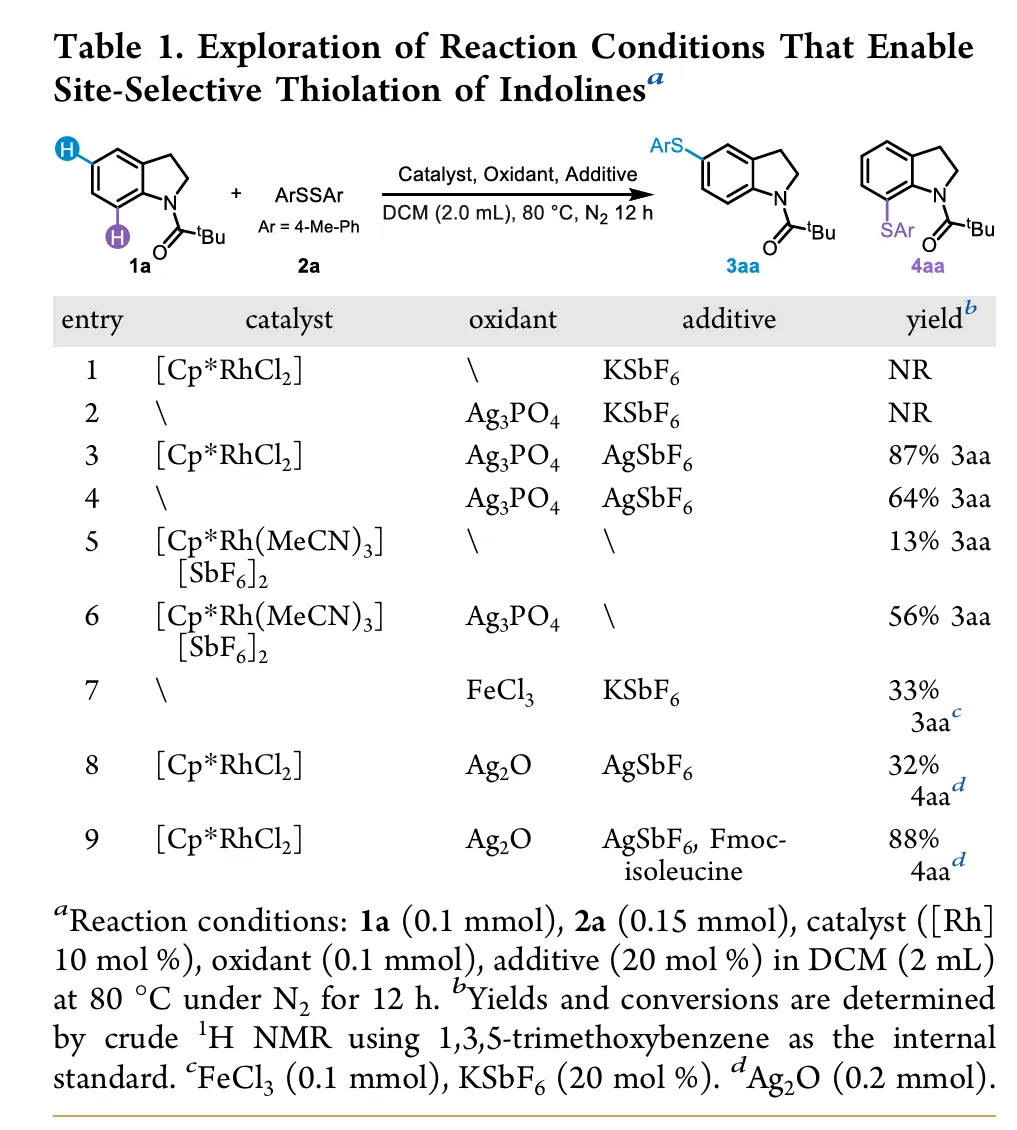
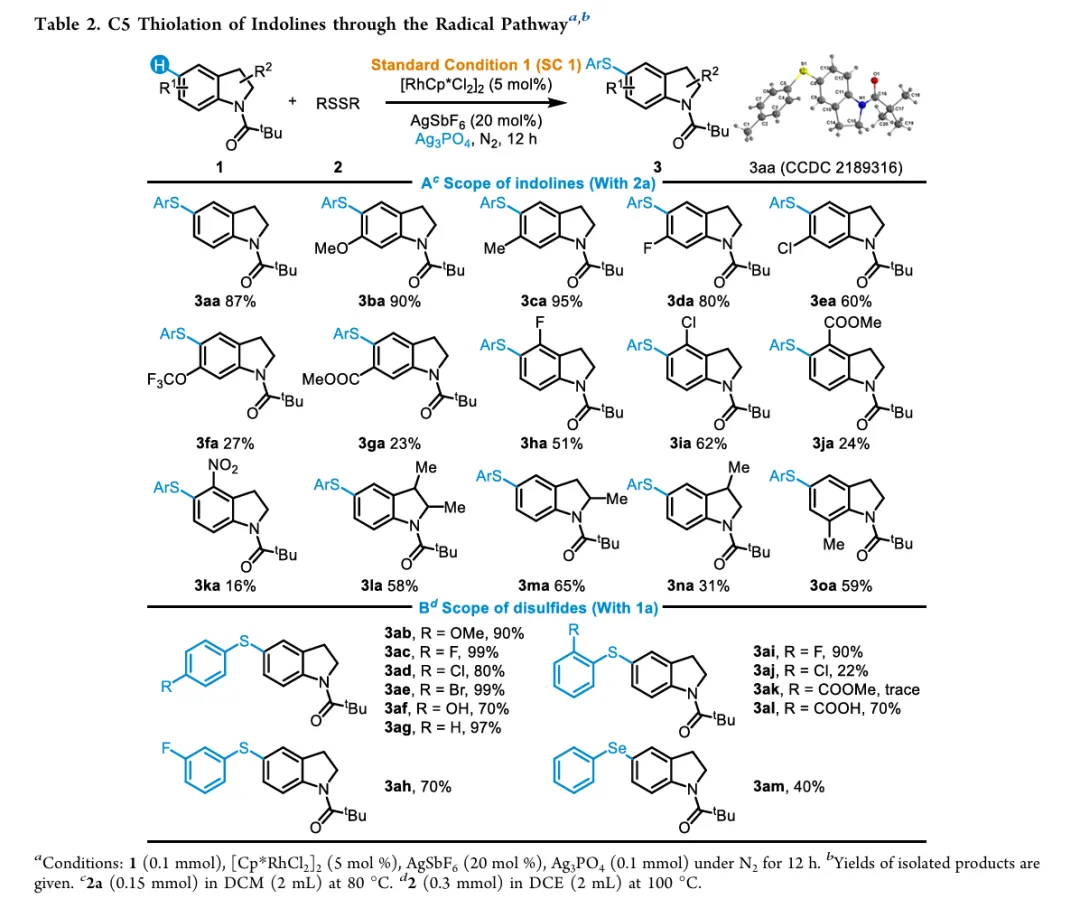
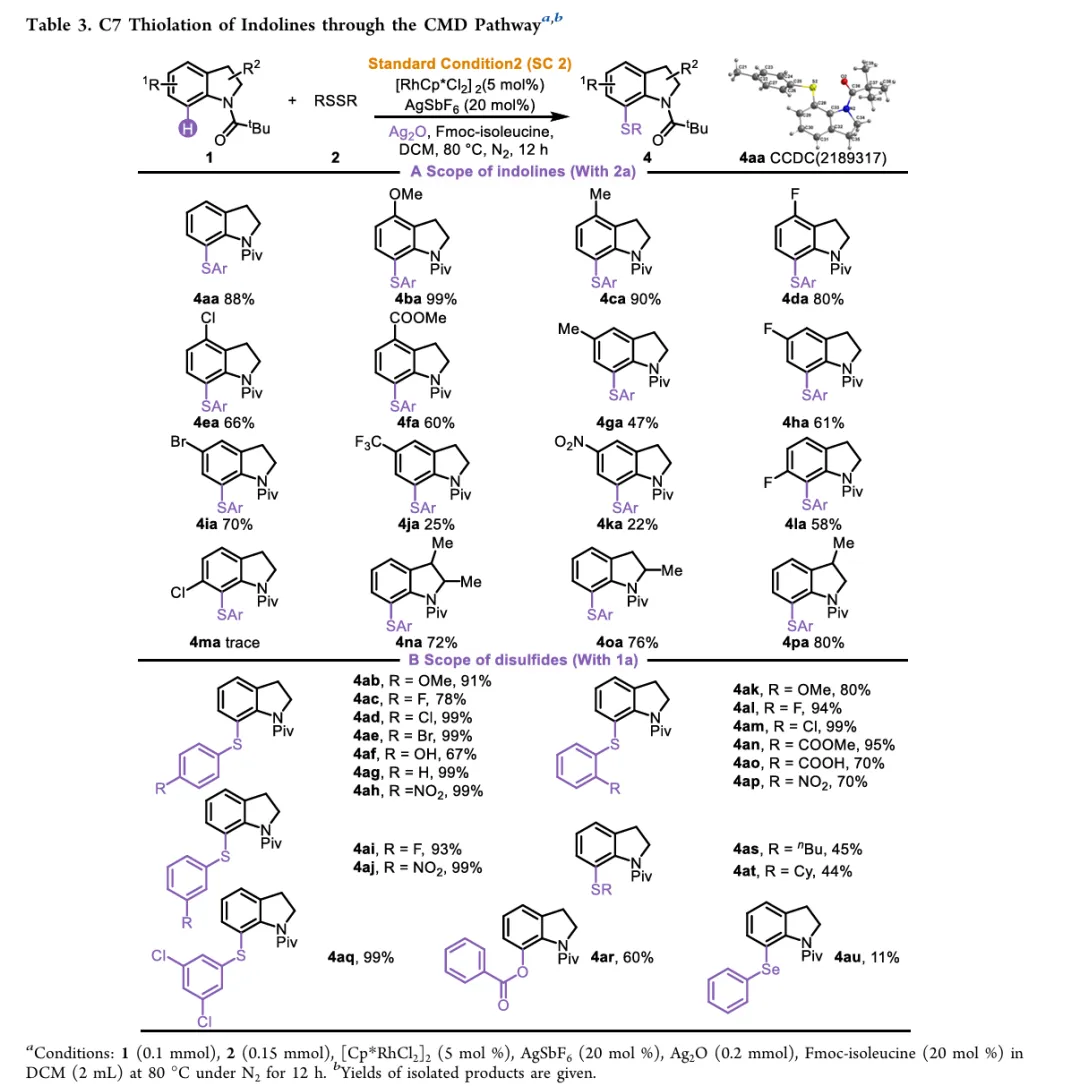
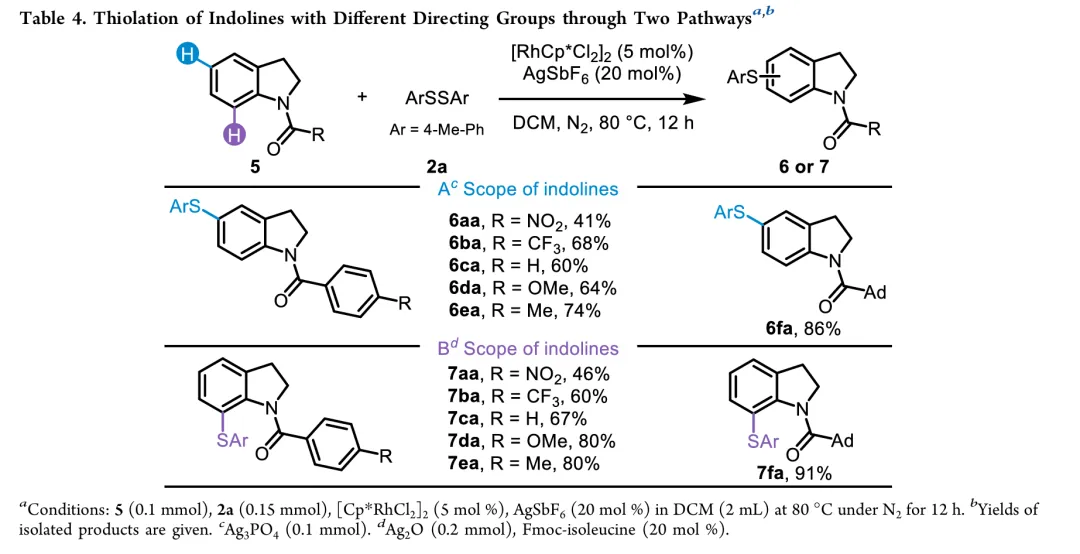
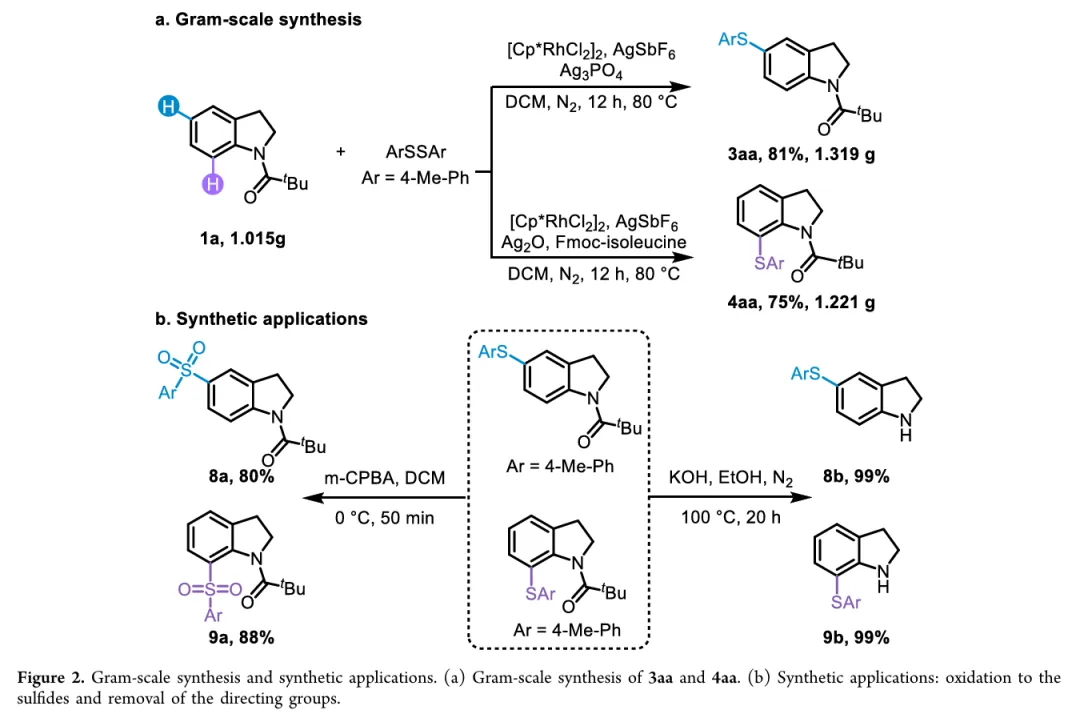
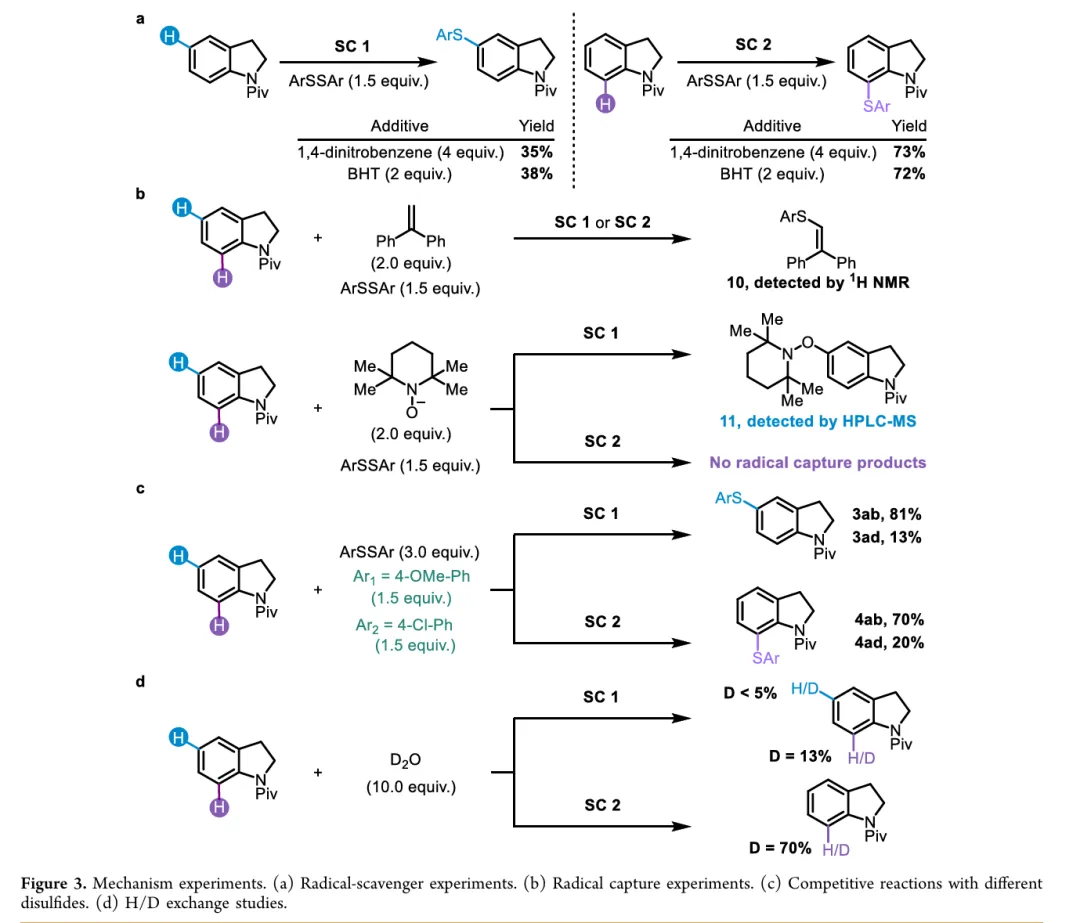
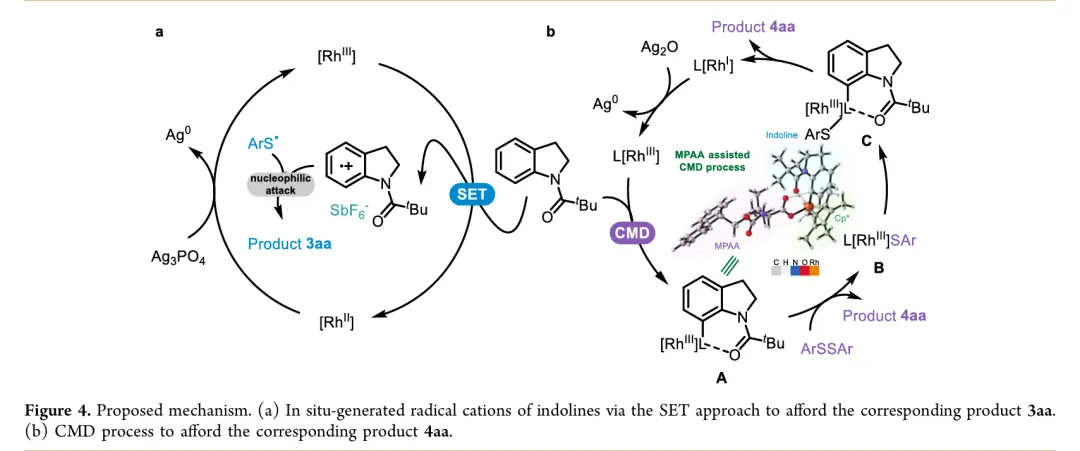
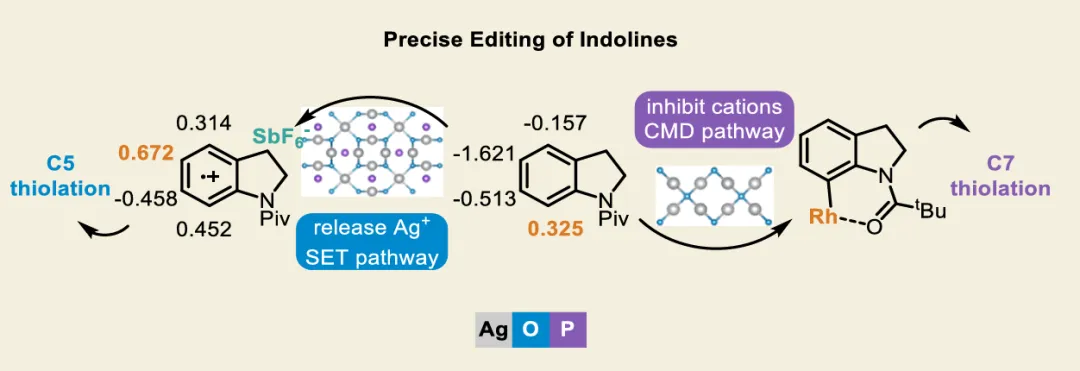 In drug discovery, the pursuit of concise and specific synthetic methods is driving the development of new strategies. Particularly during the latestages of a synthetic sequence, when the substrate molecule contains multiple highly similar C−H bonds, the ability to achieve selective “molecular editing” using mild and precise transformations has become a crucial capability. Here, we report Rh-catalyzed molecular editing of indoline derivatives at different positions via a single, oxidant-tunable catalytic system. Using Ag3PO4 as the oxidant, Rh promotes the formation of indoline radical cations stabilized by SbF6−, enabling remote C5-thiolation via a single-electron transfer (SET) mechanism, as supported by the Fukui function. In contrast, Ag2O suppresses the SET pathway, as confirmed by the ABTS assay, and enables C7-selective thiolation through a concerted metalation−deprotonation (CMD) process mediated by a Rh(III)/MPAA ligand system. Mechanistic experiments and Fukui indices calculation elucidate the origin of the observed regiodivergence, highlighting the dual reactivity of Rh(III) and offering new conceptual insights into oxidant-controlled C−H functionalization.图2. 研究背景及本策略 (图片来源于JACS Au)图3. 吲哚啉的位点选择性硫化反应条件优化 (图片来源于JACS Au)图4. 通过自由基途径实现吲哚啉C5硫化反应底物范围 (图片来源于JACS Au)图5. 通过CMD途径实现吲哚啉C7硫化反应底物范围 (图片来源于JACS Au)图6. 通过两种途径实现含不同导向基的吲哚啉硫化反应 (图片来源于JACS Au)图7. 克级合成和合成应用 (图片来源于JACS Au)图9. 可能的反应机理 (图片来源于JACS Au)In summary, we have discovered a pathway-controlled Rh(III) catalyzed C5-/C7-selective inert C−H thiolation for indoline editing. The Rh(III) catalyst exhibits dual reactivity by enabling site-selective C−H functionalization via distinct mechanistic pathways. Comprehensive mechanism investigations have elucidated the underlying principles governing each pathway, thereby offering a cohesive rationale that builds upon previous studies of C−H thiolation chemistry. This work not only advances the understanding of regioselective C−H functionalization but also provides valuable insights for designing future strategies in remote site-selective thiolation. Furthermore, both C5 and C7 thiolation reactions exhibit broad functional group tolerance and maintain a high efficiency on a gram scale, highlighting their potential applicability in industrial synthesis.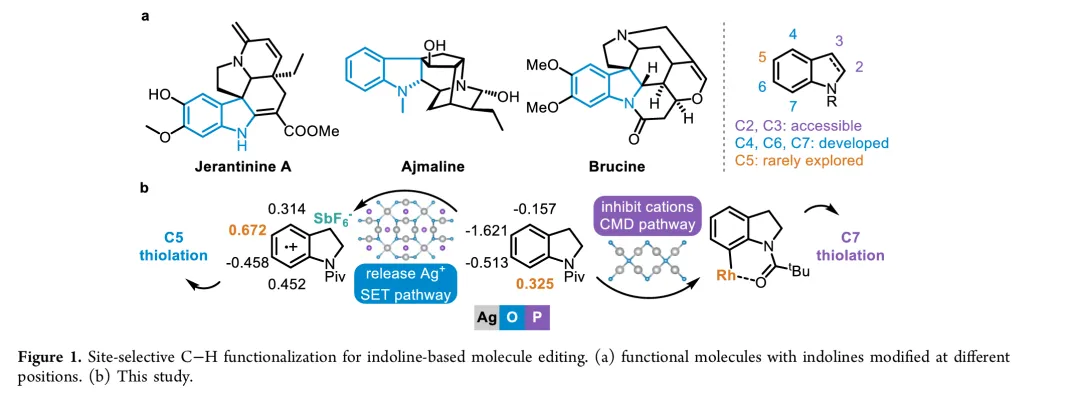
 10个月宝宝每天需要喝多少奶粉?

