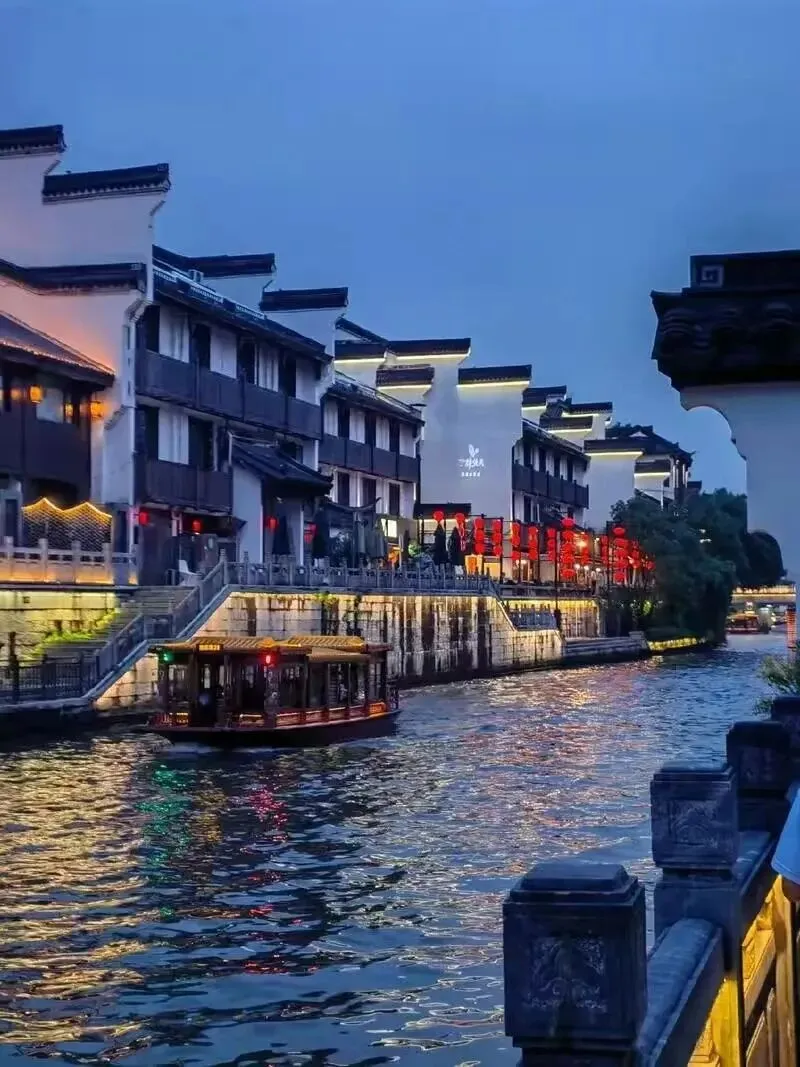
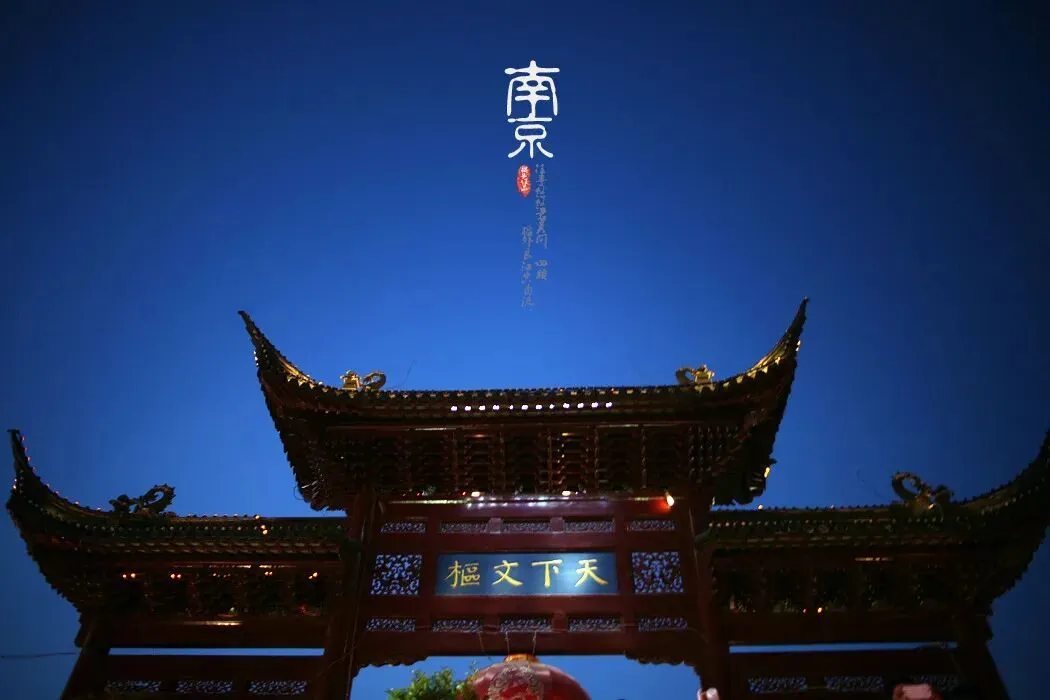
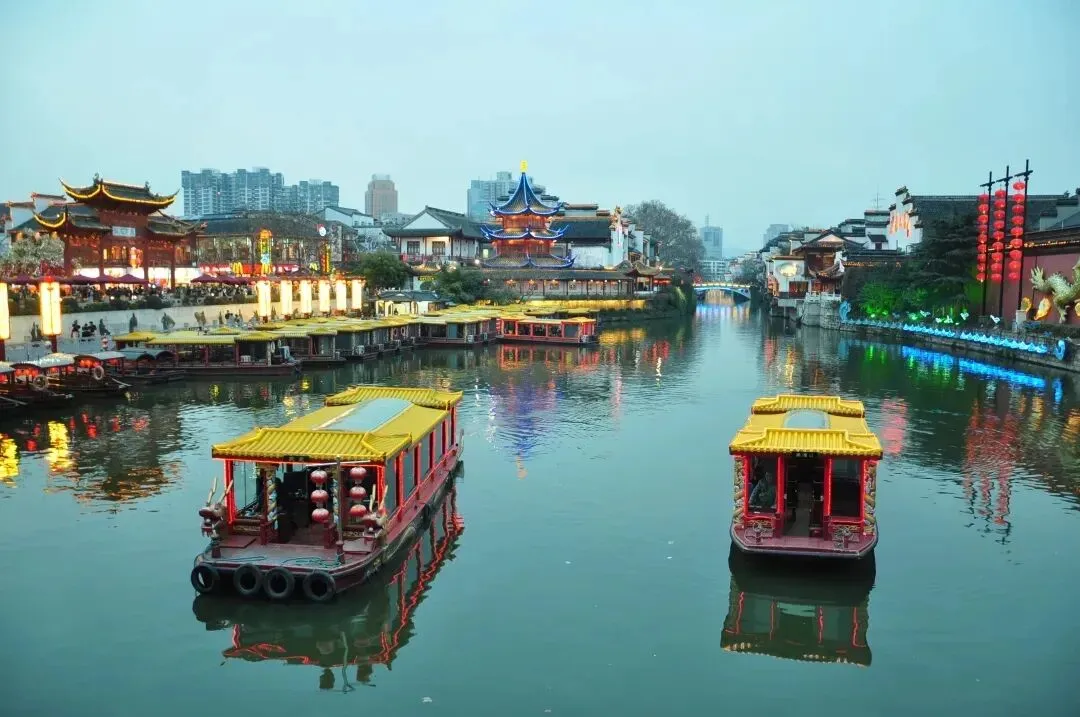
At the front flows the Qinhuai River, with China’s longest brick screen wall—110 meters long—standing on the south bank. The main hall, Dacheng Hall, stands 16.22 meters high and houses the largest statue of Confucius in China. Inside, 38 vivid panels made of jade, gold, and silver tell the story of Confucius’s life. Outside, a bronze statue of Confucius is flanked by eight white marble statues of his disciples.
夫子庙前临秦淮河,南岸矗立着长达110米的全国最长砖砌照壁。主殿大成殿高16.22米,内供国内最大的孔子像,并陈列38块以金、银、玉雕琢的孔子圣迹图。殿外立有孔子铜像,两侧分列八尊汉白玉弟子像。
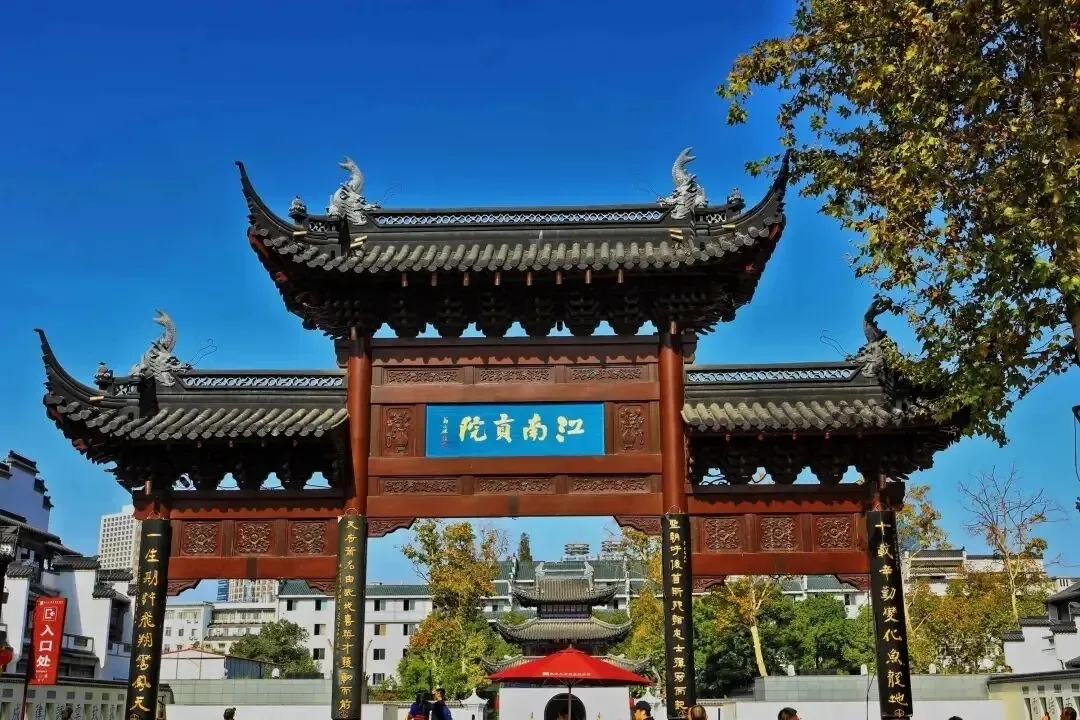
Another highlight is Jiangnan Gong Yuan, a former imperial examination site. It grew from the Southern Song Dynasty and peaked during the Guangxu period of the Qing Dynasty, becoming the largest examination school in China. The three-story Mingyuan Tower and over 20,000 examination cells still stand. Today, a museum on the imperial examination system is located here.
另一处重要景点是江南贡院,这是中国古代科举考场。它自南宋开始发展,至清光绪年间达到鼎盛,成为全国规模最大的科举考场。三层楼的明远楼与两万多间号舍保存至今,现已建成科举专题博物馆。
The temple area is also a cultural hub. The Qinhuai Lantern Festival, dating back to the Southern Dynasties, fills the night with thousands of colorful lanterns during the Spring Festival and Lantern Festival. Traditional performances such as opera, acrobatics, and puppet shows are also held regularly.
夫子庙街区也是文化活动的中心。秦淮灯会始于南朝,每逢春节和元宵佳节,万盏彩灯点亮夜空。此外,还定期上演戏曲、杂技、木偶戏等传统表演。